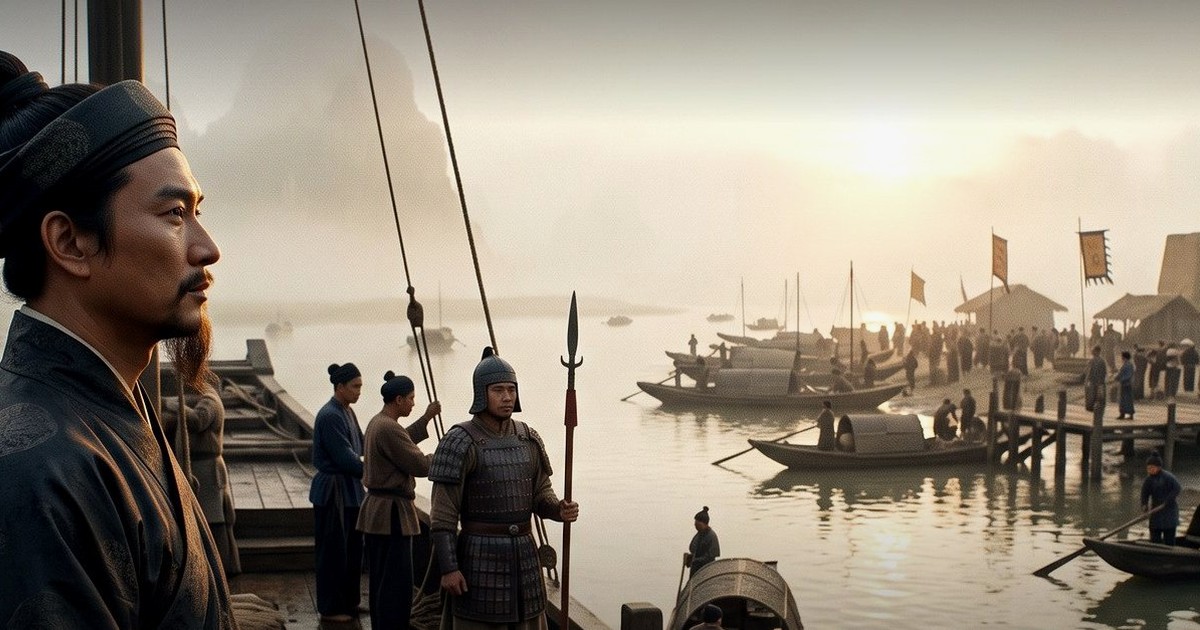
981: the Song army at the border
In 981 Hầu Nhân Bảo fell and the Song army fled. The record gives the war two lines; Season II gives it a border, a boy on a throne and a general.
Characters
The Song commander opposite Lê Hoàn in 981: what the chronicle records, what Song sources add, and why the battle details are later and competing.
Hầu Nhân Bảo is the only enemy the series names in its chronology, and the record names him only to kill him. The 981 entry pairs his fall with the Song army's retreat: Hầu Nhân Bảo falls in battle; the Song army flees. Everything else a page might want — a rank, a plan, a battlefield, a portrait — has to come from elsewhere, and this page is careful about where.
The site's published record is two clauses long. In 981, Hầu Nhân Bảo falls in battle and the Song army flees. The same chronology has already set the scene in 980: a child emperor, a dowager empress, a general, and the Song army massing at the border. The series' question for the season — “Who killed the king — and who profits?” — belongs to 979, but the war is fought by the court that question left behind.
The named enemy enters at the end of that sequence and exits immediately. There is no description of him, no words of his, no scene. He is a name attached to a fall.
Later sources make him a Song general from Pingyao in Shanxi, son of Hầu Ích, governor of Ung Châu for nine years. In 980 he submitted a written plan for the Giao Châu campaign and was given a command role in it. In 981 he invaded, initially with success, and was then defeated and killed with his fleet on the river. He was posthumously given a ministry title. No birth year is recorded.
None of this is in the passage the series quotes. It is context, and the page labels it as such: useful for understanding who the chronicle is naming, not evidence for scenes the record does not contain.
One of the easiest errors to make about 981 is to turn Hầu Nhân Bảo into the sole commander of the invasion. Later sources name other Song commanders alongside him — Tôn Toàn Hưng, Vương Soạn and Triệu Phụng Huân among them. The campaign was a command, not a single man's enterprise.
This matters for how the defeat is read. The chronicle's two clauses do not say that one general lost a war; they say that a named commander fell and an army withdrew. The difference is small on the page and large in the history.
The site stages the war as the middle act of its three seasons, and the record gives it almost nothing: no site, no date within the year, no numbers, no tactics. Later accounts supply battlefield stories, and they compete with one another. The record gives no basis for importing the most famous of them — the stakes in the river usually attached to another battle — and this page follows that rule.
So the interpretation here is deliberately narrow. The invasion failed and the new realm survived; the commander who fell was one of several; the details belong to later tellers. Whether he was killed in the fighting or executed after it is not something the published record settles, and the page does not choose.
The series uses the name and the outcome. It gives him no cast entry and no scene, and the page does not assume that an episode title refers to him. The image on this page is a wharf-and-army still from the series: boats, soldiers and banners at dawn. It is not a portrait, and the alt text says only what is visible.
Because the record's brevity is itself the subject. An antagonist who exists for two clauses shows how the chronicle works: it names the person whose fall marks the turn, and it leaves the war to the reader. The series can dramatise the court and the robe; it cannot give this commander a face the record never had. What it can do is keep the entry exactly as short as it is.
In 981 Hầu Nhân Bảo fell and the Song army fled. The record gives the war two lines; Season II gives it a border, a boy on a throne and a general.
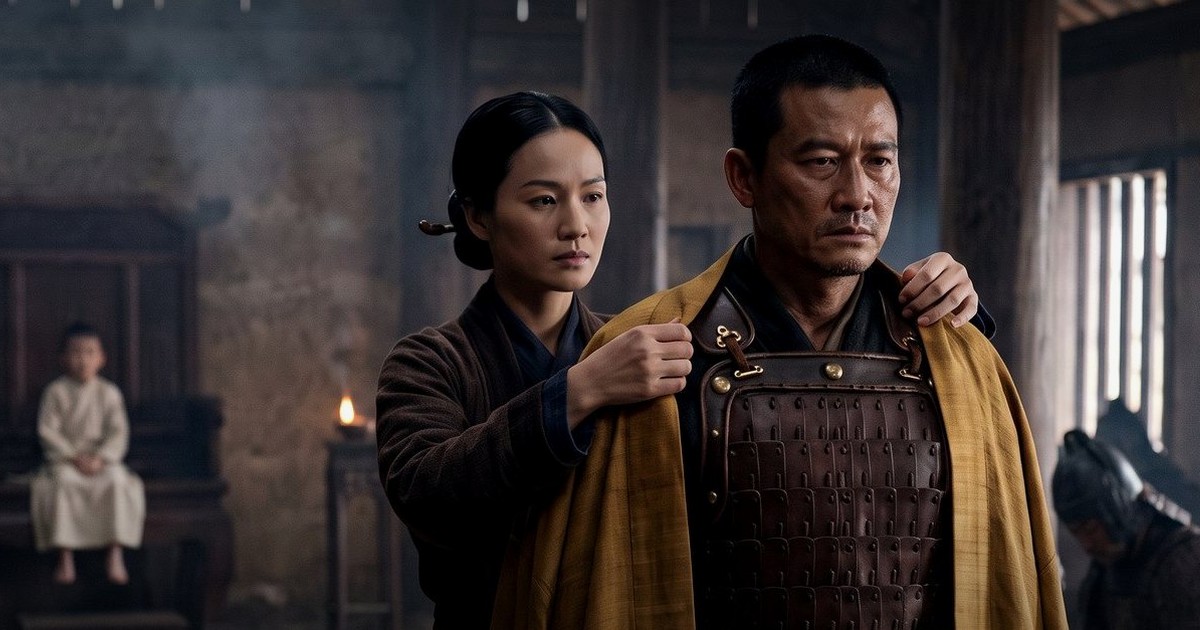
The general who took the robe in 980 and shattered the Song army in 981: Lê Hoàn, the series’ Lê Đại Hành, between the chronicle and the screen.
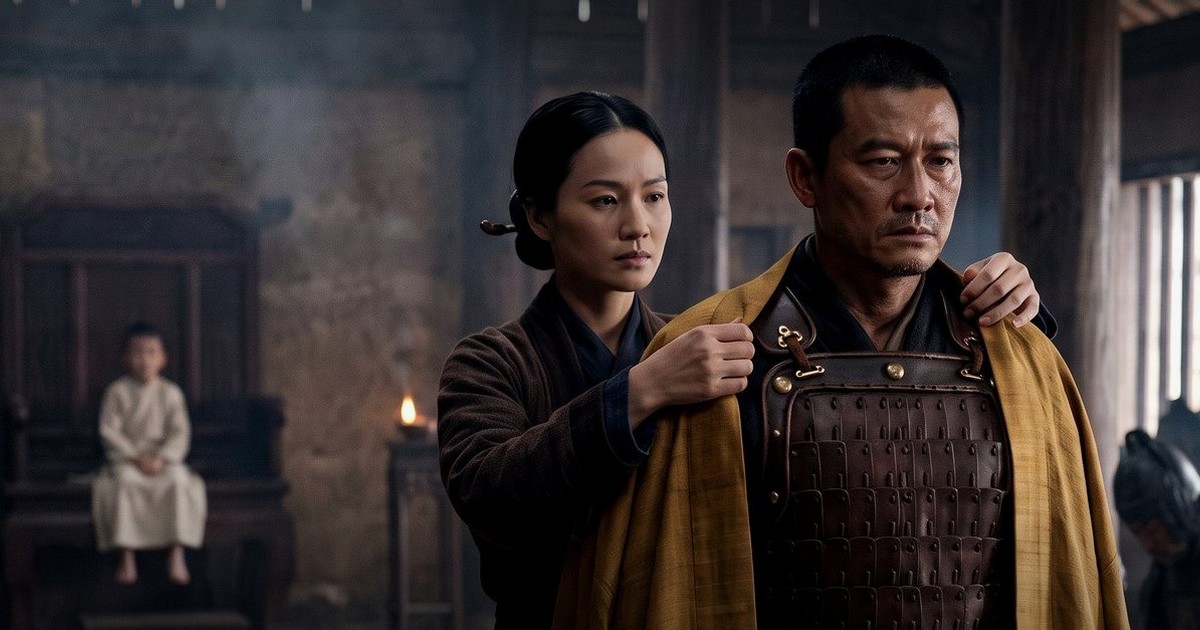
The dowager empress who ordered the imperial robe placed on a general's shoulders in 980: a lapse of virtue to some readers, vision to others.