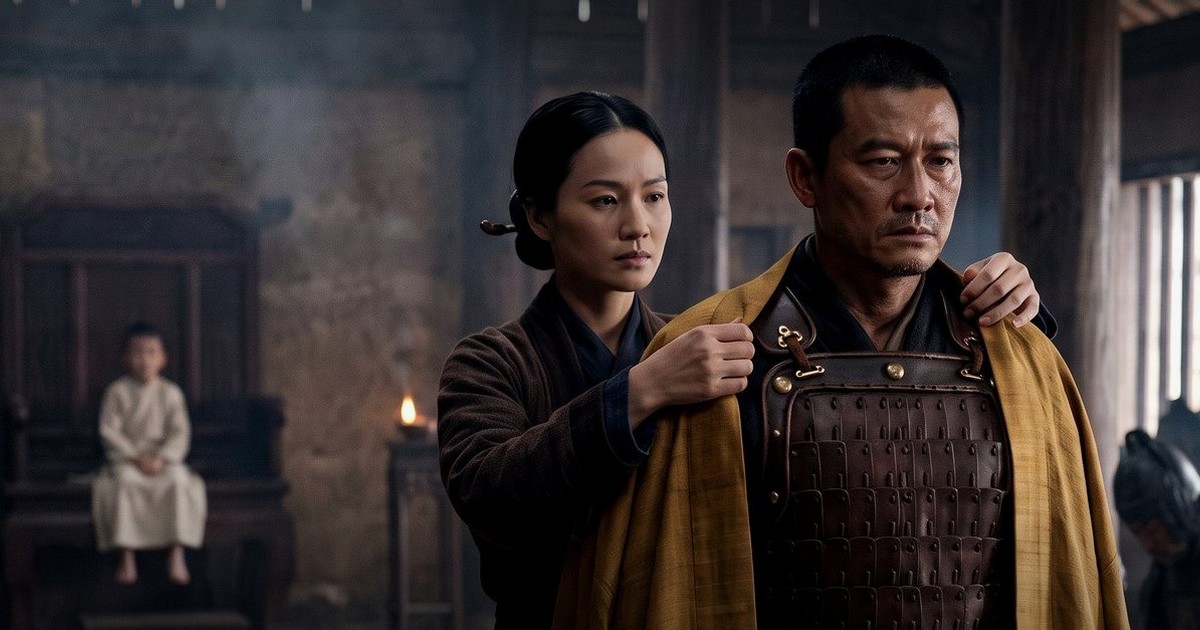
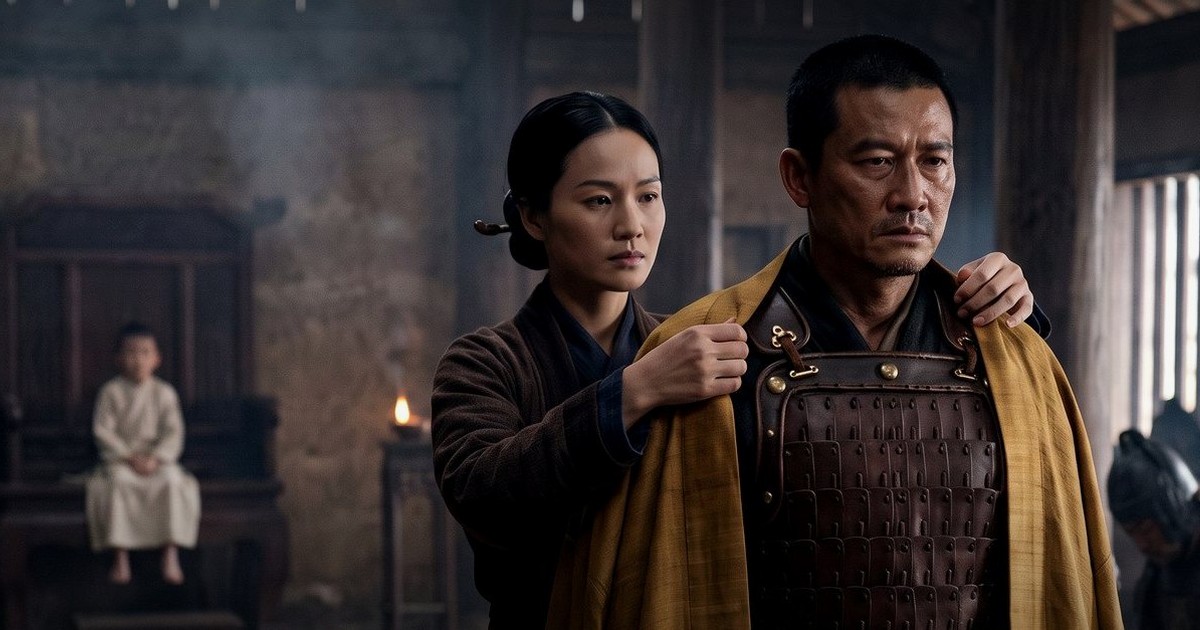
Dương Vân Nga and the robe on Lê Hoàn's shoulders
The dowager empress who ordered the imperial robe placed on a general's shoulders in 980: a lapse of virtue to some readers, vision to others.
Events
In 981 Hầu Nhân Bảo fell and the Song army fled. The record gives the war two lines; Season II gives it a border, a boy on a throne and a general.
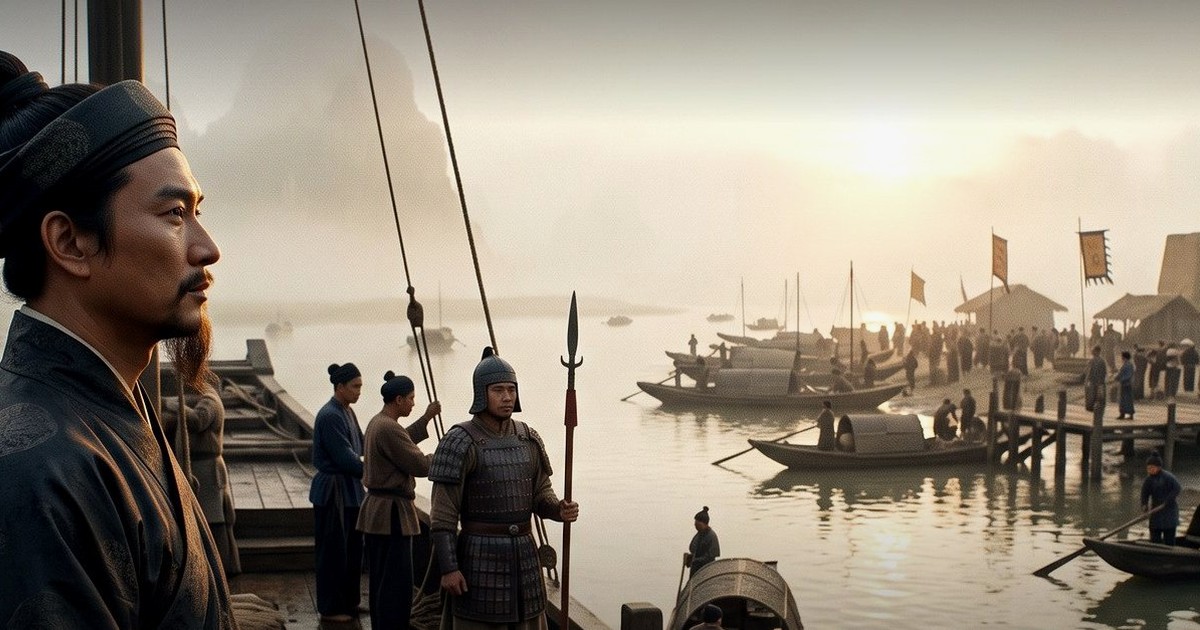
The war of 981 arrives in the series as the second half of a single crisis. In 980, after the generals acclaimed him, the dowager empress ordered the imperial robe placed on a general's shoulders. In 981 Hầu Nhân Bảo fell in battle and the Song army fled. Season II calls itself “Defence of the Realm”, and those two entries — the robe and the flight — are the skeleton it builds on.
The site's chronicle list is terse about the war. The 980 entry is the robe. The 981 entry is two clauses: Hầu Nhân Bảo falls in battle; the Song army flees. Nothing else published gives the war a site, a date within the year, a number of troops or a sequence of movements.
What the site does supply is context. The Season II summary sets the scene: the father and his eldest son died in a single night of feasting in 979; a six-year-old emperor, a dowager empress, a general — and the Song army massing at the border. The cast note adds a summary rather than a quotation: Lê Hoàn is “the man who gained the most from the feast night of 979, and the man who shattered the Song army in 981. Both are true.”
The two years are usually told together, and the site keeps them together. The first teaser compresses them into one line: “Hoa Lư, 980. A child on the throne, a dowager empress, a general — and a robe that changes hands.”
The robe is the hinge. The record has the dowager order it placed on Lê Hoàn after the generals acclaimed him; the series shows her laying it on his shoulders — a dramatisation, not a chronicle sentence. A child sat on the throne; a general held the army; an army was coming; the gesture put command of the realm in the hands of the person who would have to use it. The site's character page for Dương Vân Nga records two readings without ranking them: Confucian historians called it a lapse of virtue, modern historians call it vision.
The war gives the robe its stakes. Read the entries in order and the sequence is legible: a court in crisis, a transfer of authority, an invasion, a battle, a flight. The record states the sequence, not the argument. It does not say that the Song came because the throne was weak, and this page will not say it either. It says only that the two entries stand next to each other in the same season.
Almost everything a war story usually needs. There is no battlefield in the published material, no river, no pass, no date in the year. Hầu Nhân Bảo is a name attached to a fall, without a rank, a title or an explicit side in the site's wording — he is simply the commander who falls. The Song army's flight is stated as a fact and not described.
That thinness is the point. The record preserves the outcome — the invasion failed, the new realm survived — not the fighting.
The series gives 981 a season title and a question. The season is “Defence of the Realm”; its question is “Who killed the king — and who profits?” The second question belongs to 979, but it governs the whole season: the war is fought by a court whose legitimacy is still being argued.
What the site offers as interpretation is structural rather than historical. It pairs the war with the regency and lets the outcome settle the regency in Lê Hoàn's favour. It quotes no historian explaining 981, claims no inevitability and names no battle. Where the record speaks, as here, it keeps the entry short.
Everything in this section is hư cấu — invention — labelled as such by the studio.
It is the second date on the spine and the first test of the state founded in 968. The full trailer lists the seasons as Unification, Defence of the Realm and the move of the capital; 981 is the middle term, the moment the new realm has to prove it can survive. The record gives that moment two lines. The season gives it a border, a boy on a throne and a general who had just been handed the robe.
Whether the war made the dynasty or the dynasty made the war is not a question the entry answers. It records the fall and the flight. The rest is what the drama is for.
The dowager empress who ordered the imperial robe placed on a general's shoulders in 980: a lapse of virtue to some readers, vision to others.
Ngô Sĩ Liên compiled the Toàn thư in 1479; the first complete print came in 1697. What the chronicle is, how it survives, and what the series takes from it.