Đinh Bộ Lĩnh: the man who ended the Twelve Warlords
He ended the Twelve Warlords and gave the realm its name. Then a night of feasting in 979 ended the reign — and the chronicle names a killer.
Characters
The six-year-old emperor of 979, the child behind the robe, and the man killed by a stray arrow in 1001: what the record says and what later histories add.
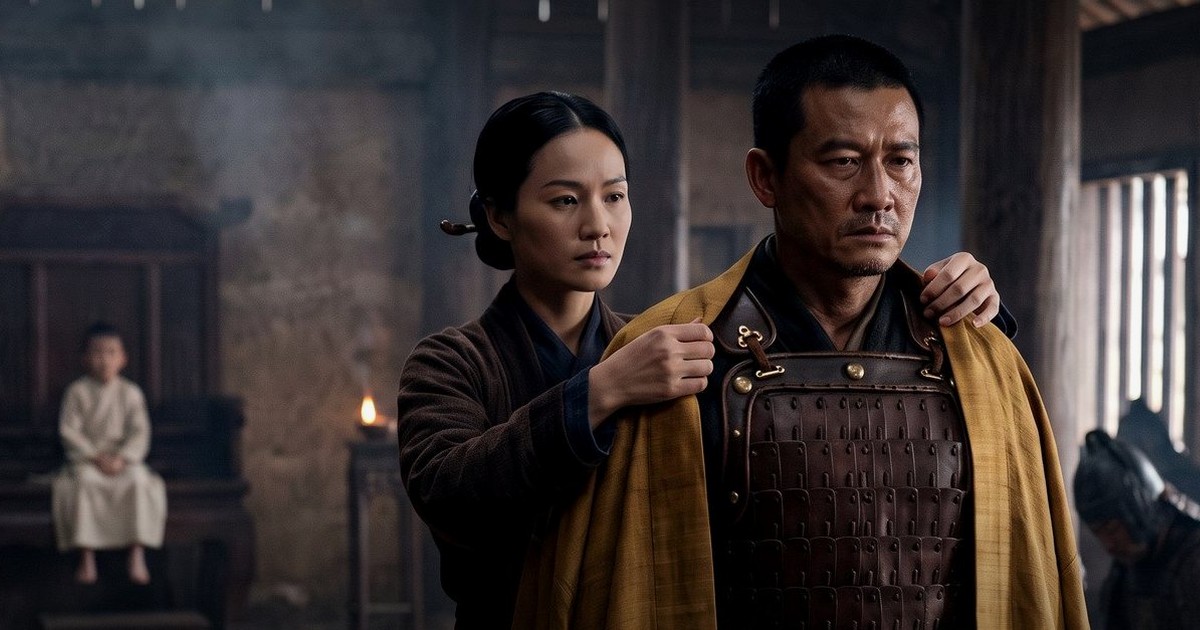
On the series’ share image a child sits on a raised throne behind the robe, small and still while the adults decide. He is the reason the robe moves at all. In the chronicle he is Đinh Toàn, second and last of the Đinh emperors: six years old when he succeeds in 979, eight months on the throne, then Vệ vương for two decades, killed by a stray arrow during a campaign in 1001. The record gives the ages and the events; what they mean is a later argument.
The chronicle span is short. In 979, Đinh Tiên Hoàng and his eldest son Đinh Liễn are murdered in the palace courtyard. Toàn, the son of Dương thị, succeeds at the age of six. In 980 the transfer follows: the generals acclaim Lê Hoàn, the dowager empress orders the imperial robe placed on him, and the child’s reign ends after eight months. He becomes Vệ vương and lives on for about twenty years, until 1001, when he dies at Cử Long — in Cầm Thủy, Thanh Hóa — hit by a stray arrow, aged twenty-seven by the reckoning of later sources. The chronicle says nothing about Lê Hoàn intending his death.
The names around him carry their own caveats. “Phế Đế” — the deposed emperor — belongs to older historiography; the Cương mục, a later compilation, prefers “Đế Toàn” because no formal posthumous title was given. That choice is itself a later editorial act, not a chronicle formula.
The Cương mục’s editorial note moralises the 980 transfer: it suggests Lê Hoàn took advantage of the crisis and pushed the old lord to his death. That is a later judgement, written centuries afterwards, not a contemporary charge; it should be read as the tone of a later compiler, not as evidence. Modern histories describe Toàn more soberly: the child whose accession creates the regency, and whose long life as a prince keeps a rival line quietly present at court.
He appears in the published material as the child of Season II: the hero image names him seated on the throne behind the robe, and the season summary speaks of “a six-year-old emperor”. There is no cast biography of him and no line of dialogue in the material the site publishes. The series’ Season II question — “Who killed the king — and who profits?” — is a question he inherits rather than answers: he is the reason the question of legitimate power becomes urgent, because the answer on the throne is a child.
Everything in this section is hư cấu. Any scene in which Toàn speaks, chooses or understands what is happening around him is invention; the published material gives him no words. The still above shows a child on a throne — the series’ image of him, not a portrait — and it is an illustration made with generative tools, not a photograph or archival footage. The two decades as Vệ vương are a silence the series has so far left alone: to stage them would be to compose them.
It does not give his birth year as 974 — the chronicle gives only his age of six at accession, and 974 is a later calculation. It does not claim that Lê Hoàn deliberately had him killed. It does not call “Phế Đế” an official title. And it does not use “Dương Vân Nga” as the recorded name of his mother: the chronicle calls her Dương thị, and the later name belongs to the series and to tradition.
Đinh Toàn is the legitimacy question in miniature. A realm founded in 968 by one man’s sword passes, eleven years later, to a six-year-old who cannot hold it; the regency that follows is the hinge of the whole series. The record gives his ages, an interval of eight months and an arrow in 1001. Later writers give him a moral. The series gives him a throne and a silence, and it keeps both visible.
He ended the Twelve Warlords and gave the realm its name. Then a night of feasting in 979 ended the reign — and the chronicle names a killer.
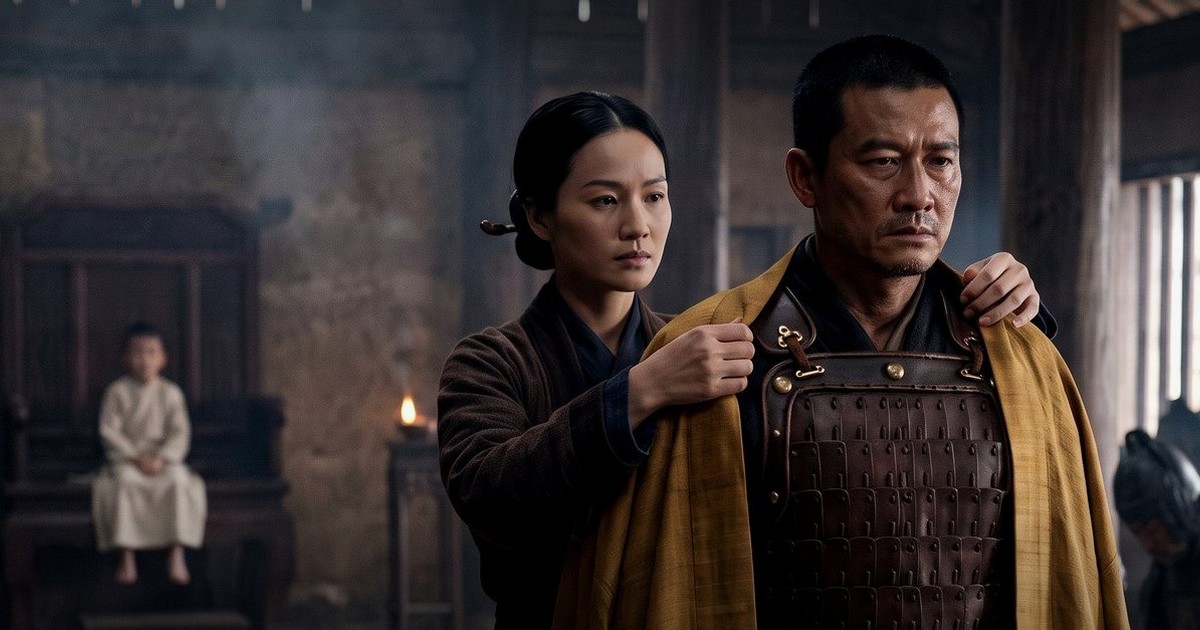
The dowager empress who ordered the imperial robe placed on a general's shoulders in 980: a lapse of virtue to some readers, vision to others.
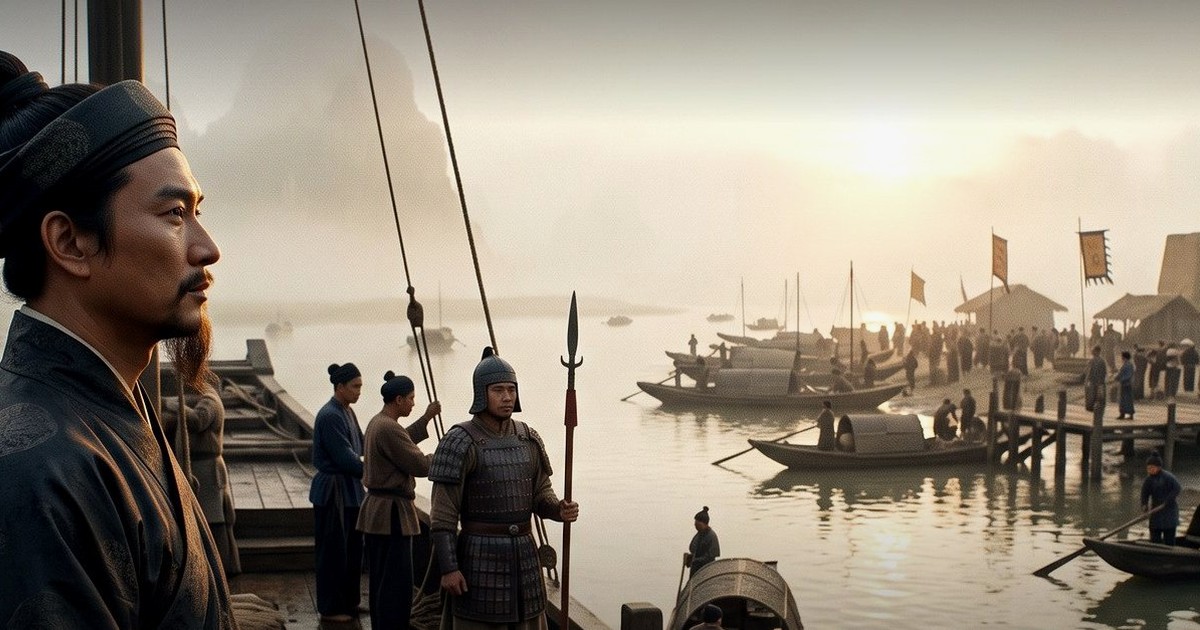
In 981 Hầu Nhân Bảo fell and the Song army fled. The record gives the war two lines; Season II gives it a border, a boy on a throne and a general.