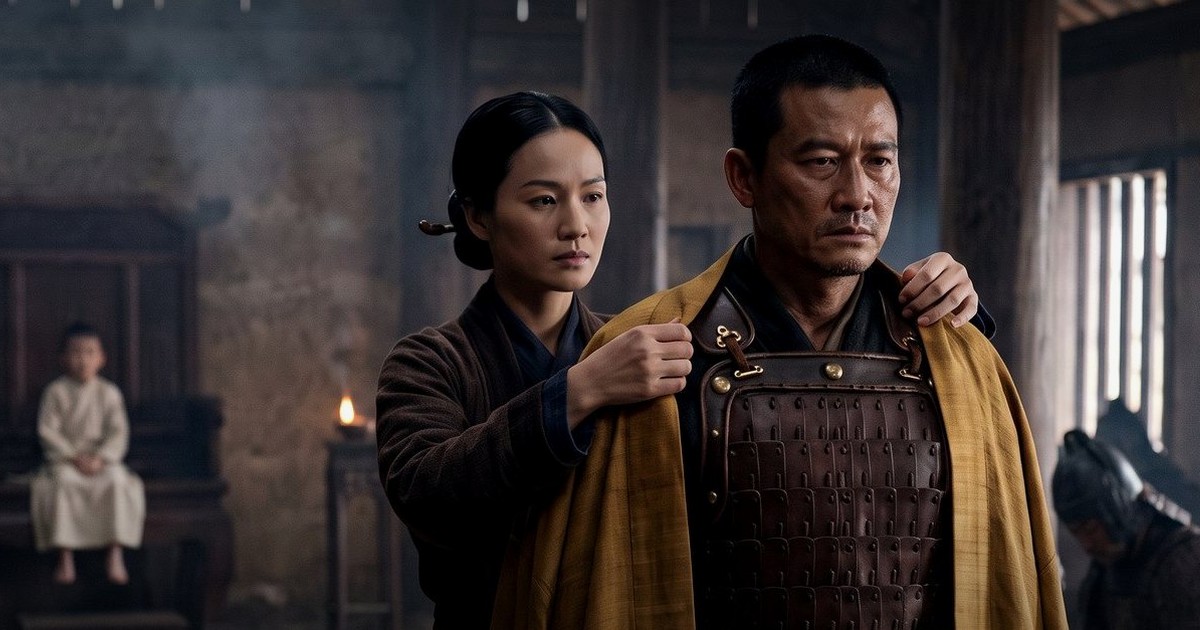
Lê Hoàn: the general who became emperor
The general who took the robe in 980 and shattered the Song army in 981: Lê Hoàn, the series’ Lê Đại Hành, between the chronicle and the screen.
Characters
He ended the Twelve Warlords and gave the realm its name. Then a night of feasting in 979 ended the reign — and the chronicle names a killer.
Đinh Bộ Lĩnh holds a strange place in the series: he is the answer to Season I’s question, and he is dead before Season II’s story can begin. “Who is strong enough to make one land out of twelve?”, the first season asks. By 968 the answer has a name, a title and a new country — and by 979 the question is being asked again over his body.
The chronicle gives three entries. In 968, Đinh Bộ Lĩnh crushes the Twelve Warlords, takes the throne and names the realm Đại Cồ Việt. In 979, a night of feasting ends with the king — Đinh Tiên Hoàng, the name the chronicle gives him — and his eldest son Đinh Liễn murdered in the palace courtyard. The chronicle names the killer: Đỗ Thích. A six-year-old succeeds, his mother becomes dowager, and the general Lê Hoàn becomes regent. In 980 the imperial robe passes to Lê Hoàn.
The series’ Season I summary supplies the situation the chronicle compresses: the Ngô dynasty collapses, the country splinters into twelve fiefdoms, and from the caves of Hoa Lư, Đinh Bộ Lĩnh wins over one rival, crushes another, then is crowned over a kingdom that has barely begun to believe in itself. The cast list gives him one role, “Vạn Thắng Vương”, across Seasons I and II.
Beyond that, the excerpted record gives no birth, no childhood, no account of the twelve campaigns, and no description of his court. The caves are there; the years are not.
The name he is remembered by in the series’ cast list is a victory title, Vạn Thắng Vương, and the last episode of Season I carries it. The record does not explain how it was earned; the season’s episode titles sketch a shape — “Those Who Submit”, “The Two-Headed Snake”, “High Walls, Deep Moats”, “The Last Warlord” — but an episode title is a piece of storytelling, not a source.
The harder interpretation is 979. The chronicle names Đỗ Thích. Modern historians have contested that, proposing the regent or the empress; the record’s naming is what survives, and a name in a later chronicle is not the same thing as proof. The site’s Season II question — “Who killed the king — and who profits?” — keeps the doubt where the record leaves it. The series’ own material does not name a killer; it asks.
What 979 means politically is sharper. A realm created in 968 by one man’s military success passes, within eleven years, to a six-year-old emperor, a dowager empress and a regent. That is the instability the series keeps returning to: unity made by a sword is not automatically inherited. The series’ Season I line — a kingdom that “has barely begun to believe in itself” — is a reading of the whole arc, not a chronicle sentence.
His cast tag runs Seasons I – II. Season I is 966–968, eight episodes from “Land Without a King” to “Vạn Thắng Vương”. Season II is 979–981, and it opens on his death: the feast night, the succession, the robe, the war. His story is therefore told in two halves — the winning of the realm and the losing of it — with eleven years of his reign falling between the seasons, almost entirely outside the material the site publishes.
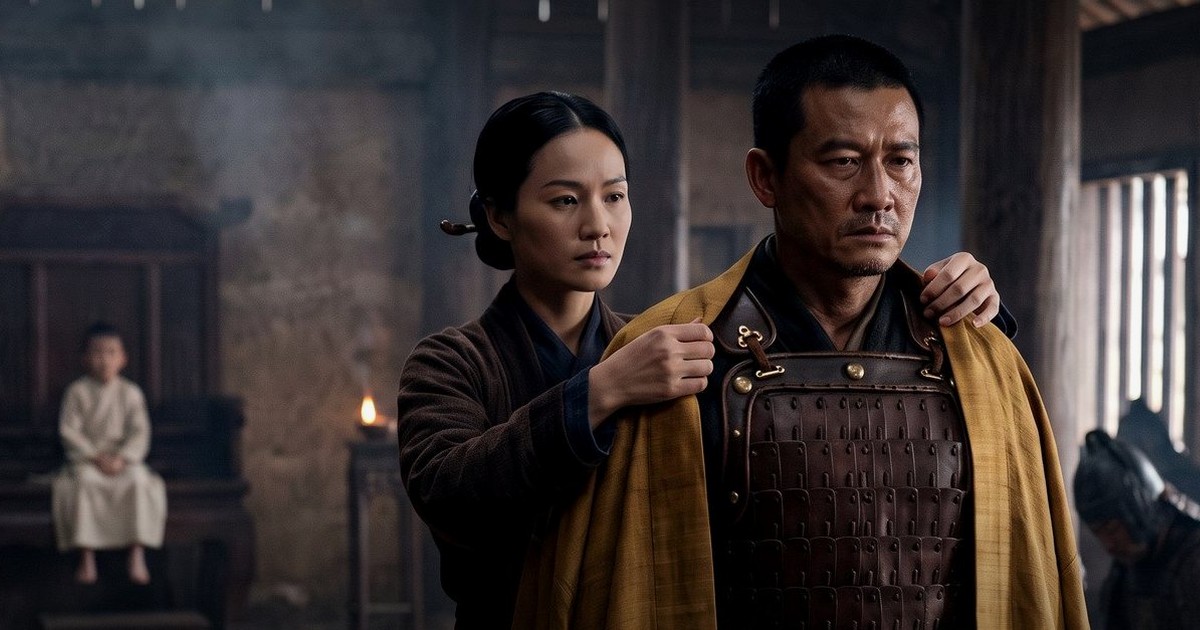
The still on this page does not show him. It shows a child in pale robes on a raised throne, armoured men kneeling — the court he left behind, not a portrait of the founder. The series has no still of Đinh Bộ Lĩnh, and this page does not pretend otherwise.
Here the register changes. Everything below is hư cấu, and the studio says so.
Đinh Bộ Lĩnh gives the series its first answer and its first silence. He makes the country in 968, and in 979 a later chronicle names his killer while modern historians question the name. The series treats both with the same method: it stages the making, and it leaves the murder as a question the record itself raises. That is what a founder looks like when the only surviving account was written down later, by people whose own century had reason to be careful.
The general who took the robe in 980 and shattered the Song army in 981: Lê Hoàn, the series’ Lê Đại Hành, between the chronicle and the screen.

The chronicle records Lê Long Đĩnh’s death in the bedchamber and explains the Ngọa Triều epithet. Folk history, Ngô Thì Sĩ and the field add readings.