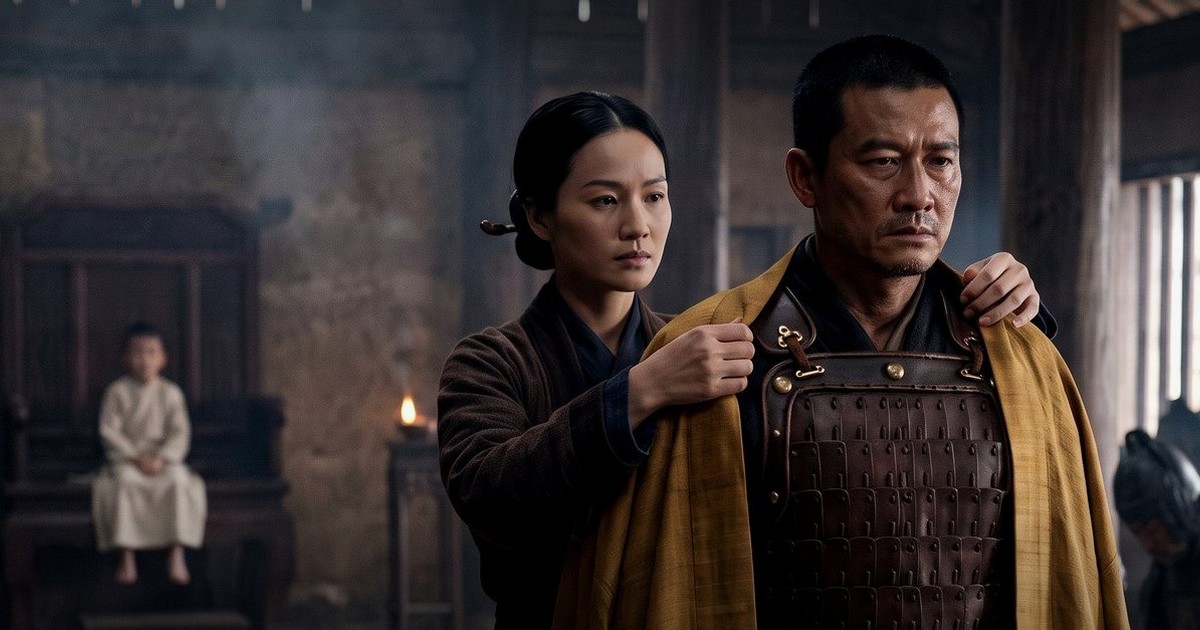
Dương Vân Nga and the robe on Lê Hoàn's shoulders
The dowager empress who ordered the imperial robe placed on a general's shoulders in 980: a lapse of virtue to some readers, vision to others.
Characters
The general who took the robe in 980 and shattered the Song army in 981: Lê Hoàn, the series’ Lê Đại Hành, between the chronicle and the screen.
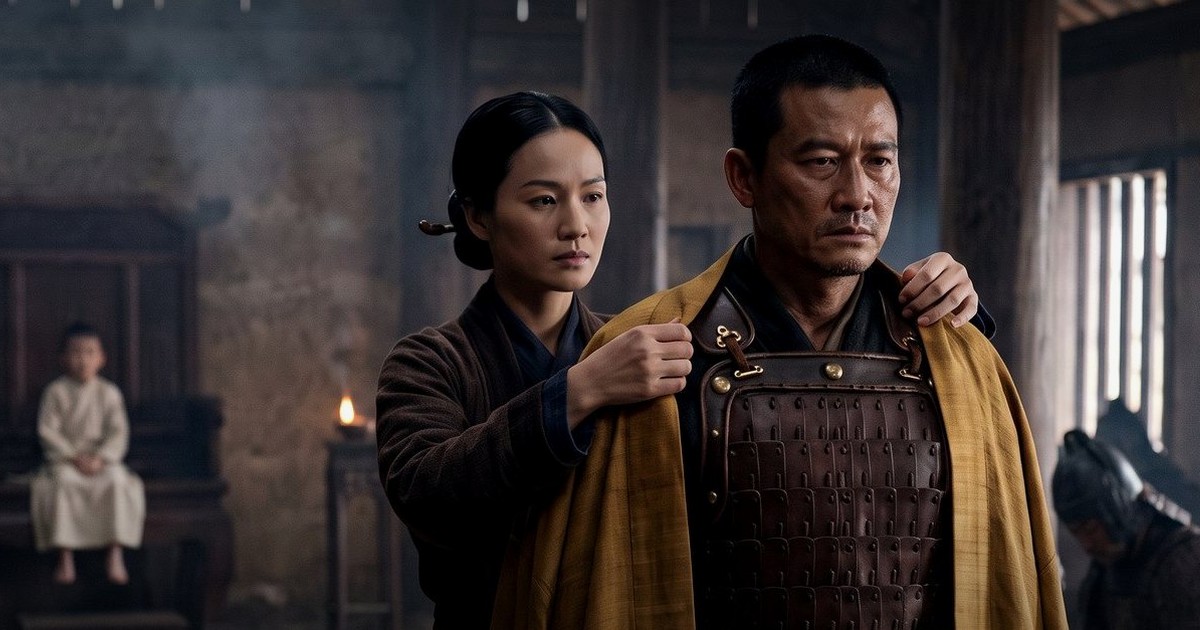
The series’ cast note for Lê Hoàn is two clauses and a verdict: “The man who gained the most from the feast night of 979, and the man who shattered the Song army in 981. Both are true.” That sentence is a good way into him, because it refuses to choose. Gain and defence sit on either side of the same two years, and the drama keeps them there.
The chronicle spine places him at four moments. In 979, Đinh Tiên Hoàng and Đinh Liễn are murdered during a night of feasting in the palace courtyard; a six-year-old succeeds, and Lê Hoàn becomes regent for the child. In 980, after the generals acclaim him, the dowager empress orders the imperial robe placed on his shoulders. In 981, Hầu Nhân Bảo falls in battle and the Song army flees. In 1005, Lê Đại Hành dies, and after seven or eight months of struggle over the throne, Lê Long Đĩnh kills his brother to take it.
That is what the record gives: a regency, an order that turns it into a reign, a victory, and a death that ends the second of the series’ three dynasties. It gives no speech of his, no account of how he governed between 981 and 1005, and no words exchanged at the moment the robe changed hands.
The series’ epithet for him — “Commander of the Ten Circuits · Lê Đại Hành” — joins the command he held under the Đinh with his reign name. The title is a foothold, not a biography; the excerpted material does not describe the command itself.
Two questions hang over him, and the record answers neither in the terms the drama uses. The first is the feast night. Season II asks plainly, “Who killed the king — and who profits?” The chronicle, in its fuller form, names a killer, and the series’ question points at the profit rather than the guilt. The cast note says Lê Hoàn “gained the most” from that night — the series observing where the gain fell, not a charge it can prove.
The second is the robe. A six-year-old emperor, a dowager empress, a general already serving as regent, and the Song army massing: that is the frame the series puts around 980. Read one way, the robe formalises a regency already in place — the adult who had been governing in the child’s name becomes the reign itself. Read another, it is a dynastic transfer carried out in public, with the child still seated behind it. Confucian historians called the woman’s act a lapse of virtue; modern historians call it vision. What that makes the man who accepted the robe is the same argument from the other side, and the series does not settle it.
The victory is the one thing the record says without ambiguity. Hầu Nhân Bảo falls, the Song army flees: the series’ word is “shattered”, and the act belongs to 981, after the robe.
His cast tag is Season II, and Season II is 979–981. The eight episode titles walk the two years: “Which Son Takes the Throne”, “Blood in the House”, “The Feast Night”, “Regency”, “Purge”, “The Imperial Robe”, “The Snake’s Head”, “The Empress of Two Dynasties”. The series page lists Act II as “Defence of the Realm (981)”, and the first teaser sets the scene in one line: Hoa Lư, 980 — a child on the throne, a dowager empress, a general, and a robe that changes hands.
His death opens Season III rather than closing Season II. The chronicle entry for 1005 is his, and the struggle that follows it — seven or eight months, then a killing between brothers — is where Season III begins. The record gives his reign a duration and his death a year; it gives nothing of the years between, which is a gap the series has so far left alone.
Everything in this section is hư cấu — invention — and the studio labels it so.
The useful thing about Lê Hoàn as a subject is that the record will not let you make him one thing. The man who gained most from a murder and the man who then held the realm against an invasion are the same man in the same chronicle, and the drama’s choice is to keep both clauses of the cast note standing. Gain, defence, an order that became a reign with a hole in the middle of it: the record supplies the outline, the series supplies the person, and the disclaimer keeps the line between them visible.
The dowager empress who ordered the imperial robe placed on a general's shoulders in 980: a lapse of virtue to some readers, vision to others.

The robe of 980, the regency it sealed, and a second marriage the record places after the war: Dương Vân Nga and Lê Hoàn.

The last Lê king, an epithet that may be slander, and a death the record leaves unexplained — the series stages four readings of it.