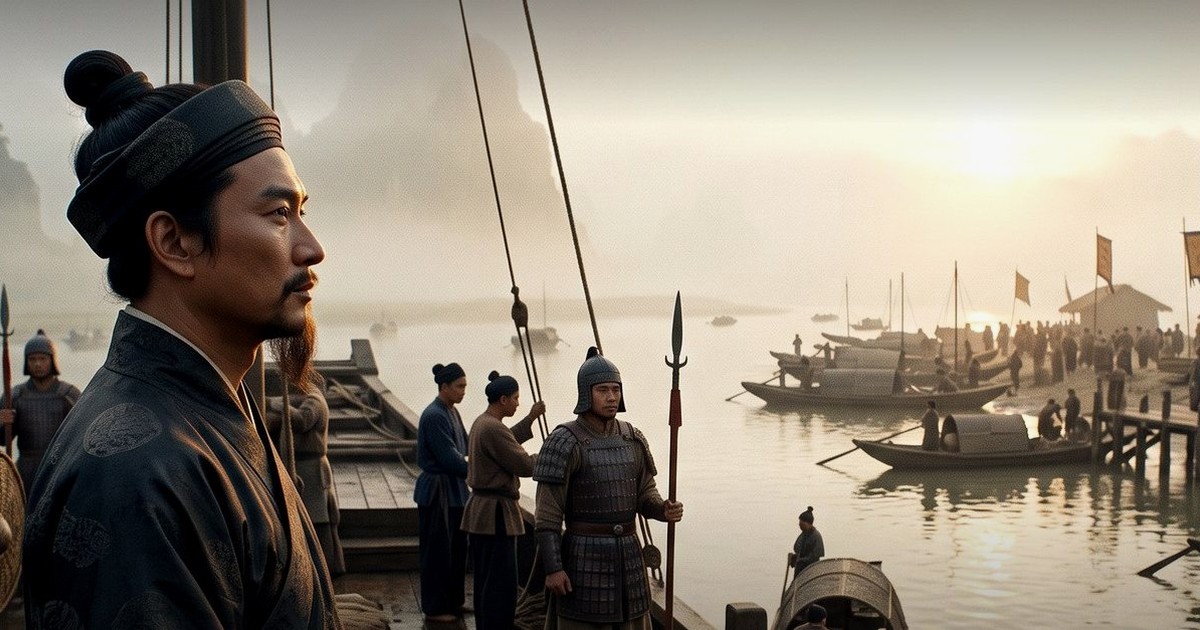
Lý Công Uẩn: the monk-raised emperor
Raised at Cổ Pháp and taught by the monk Vạn Hạnh: a palace guard who took the throne two days after a king's death — and moved the capital.
Characters
The dowager empress who ordered the imperial robe placed on a general's shoulders in 980: a lapse of virtue to some readers, vision to others.
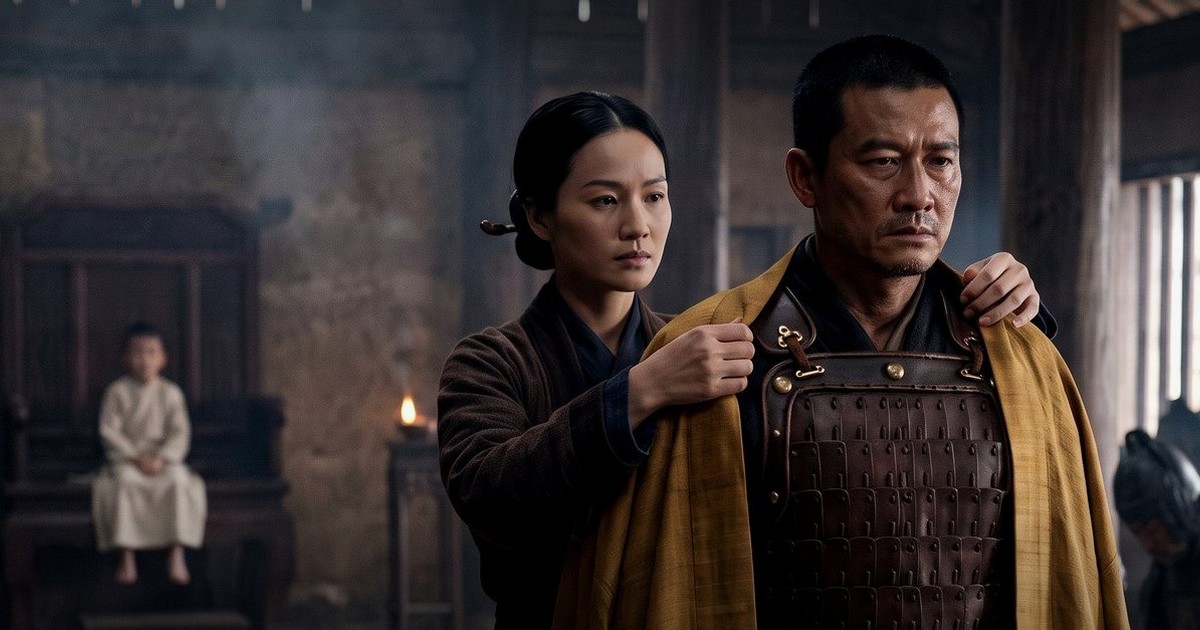
The image the series returns to is almost all of her story: Dương Vân Nga lays the imperial robe on Lê Hoàn’s shoulders, the child king Đinh Toàn sits on the throne behind them, generals kneel on both sides. It is the share image of the whole project, and the poster of the first teaser. Everything else about her — what she thought, what she wanted, what it cost — is where the record thins out.
The chronicle calls her Dương thị; the series, like this page, uses the later name Dương Vân Nga. The chronicle timeline puts her at the hinge of two entries. In 979, a night of feasting ends with Đinh Tiên Hoàng and Đinh Liễn murdered in the palace courtyard. The series’ Season II summary sets the scene that follows: a six-year-old emperor, a dowager empress, a general — and the Song army massing at the border. In 980, after the generals acclaim Lê Hoàn, she orders the imperial robe placed on his shoulders. In 981, Hầu Nhân Bảo falls in battle and the Song army flees.
That is what the record gives here: an order, and its immediate military context. It does not give her words, her reasons, or the sequence of the hours before it. The series’ cast note adds only an epithet — “Dowager Empress of Two Dynasties” — and places her across Seasons II and III.
Two readings of the robe have been kept alive, and the series summarises them without ranking them. Confucian historians called it a lapse of virtue. Modern historians call it vision. Neither phrase comes with a name attached in the material the site publishes, and that is honest: the series is reporting a long argument, not settling it.
The argument is about what the robe actually did. A child sat on the throne; a general held the army; an army was coming. The order transfers a throne while leaving the child visible behind it. Read one way, a woman puts the realm’s survival above the claims of a minor. Read another, she breaks the order that a dynasty’s legitimacy depends on. The two dynasties of her epithet — Đinh and Lê, two of the three the series counts between 968 and 1010 — meet in that gesture, and whichever way you read it, she is the one who ordered it. The series sets the positions side by side; its disclaimer is explicit that showing a view is not endorsing it.
Her cast tag runs SEASONS II – III, and Season II is built around her. The episode titles carry the argument: “The Imperial Robe”, then “The Empress of Two Dynasties”. The first teaser is hers, and its logline is almost a stage direction: Hoa Lư, 980. A child on the throne, a dowager empress, a general — and a robe that changes hands.
After 981, the excerpted record stops following her, and the series keeps her on screen into Season III. That continuation is a choice of the drama rather than a claim from the chronicle: what a dowager empress of two dynasties does in the years of Lê Long Đĩnh is not something the material the site publishes answers.
Everything in this section is hư cấu — invention — and is labelled as such.
The robe is the emblem of the series because it is a public decision with no recorded reasoning. History preserved the order and dropped the deliberation, and fiction is the only instrument left for the deliberation — provided it says so. The teaser offers the image without a verdict. The site’s history section offers the verdicts without an image. Between the two, there is room for a viewer to do the reading that neither the chronicle nor the drama will do for them.
Raised at Cổ Pháp and taught by the monk Vạn Hạnh: a palace guard who took the throne two days after a king's death — and moved the capital.
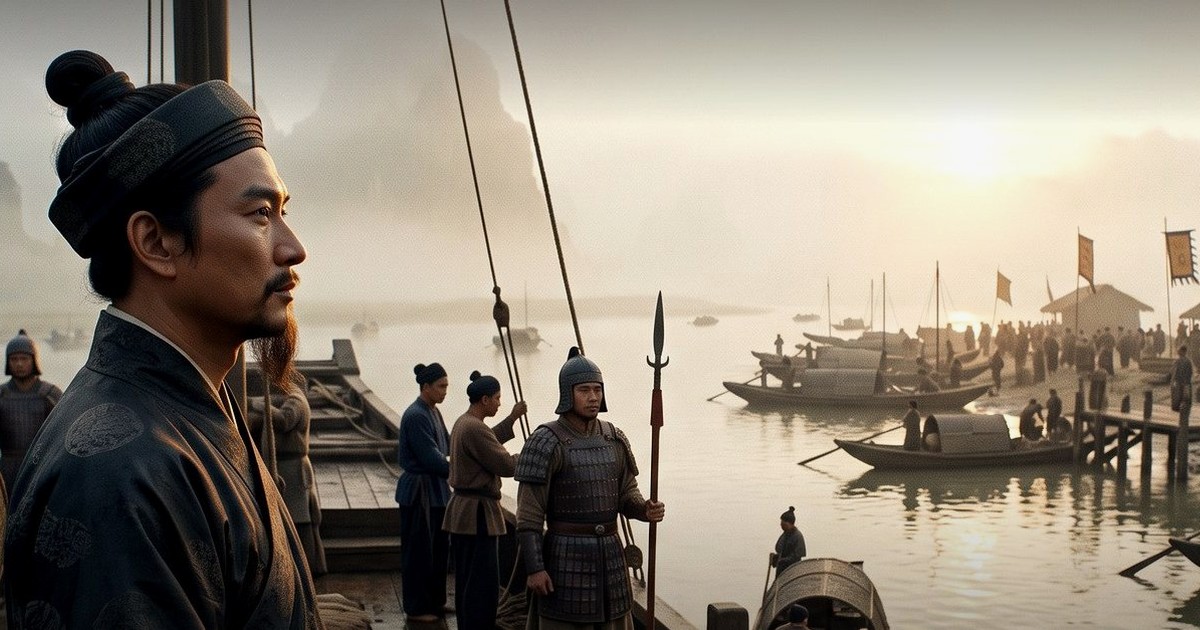
A monk taught Lý Công Uẩn and interpreted an omen the series withholds: where the record stops, and what later readers added.
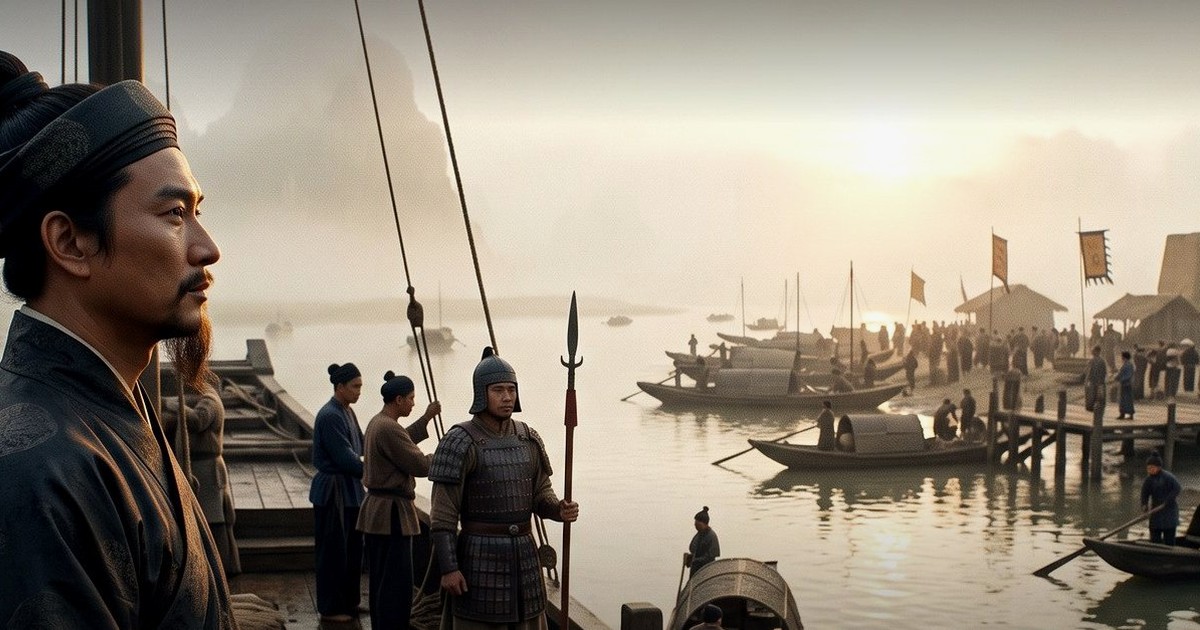
In 981 Hầu Nhân Bảo fell and the Song army fled. The record gives the war two lines; Season II gives it a border, a boy on a throne and a general.