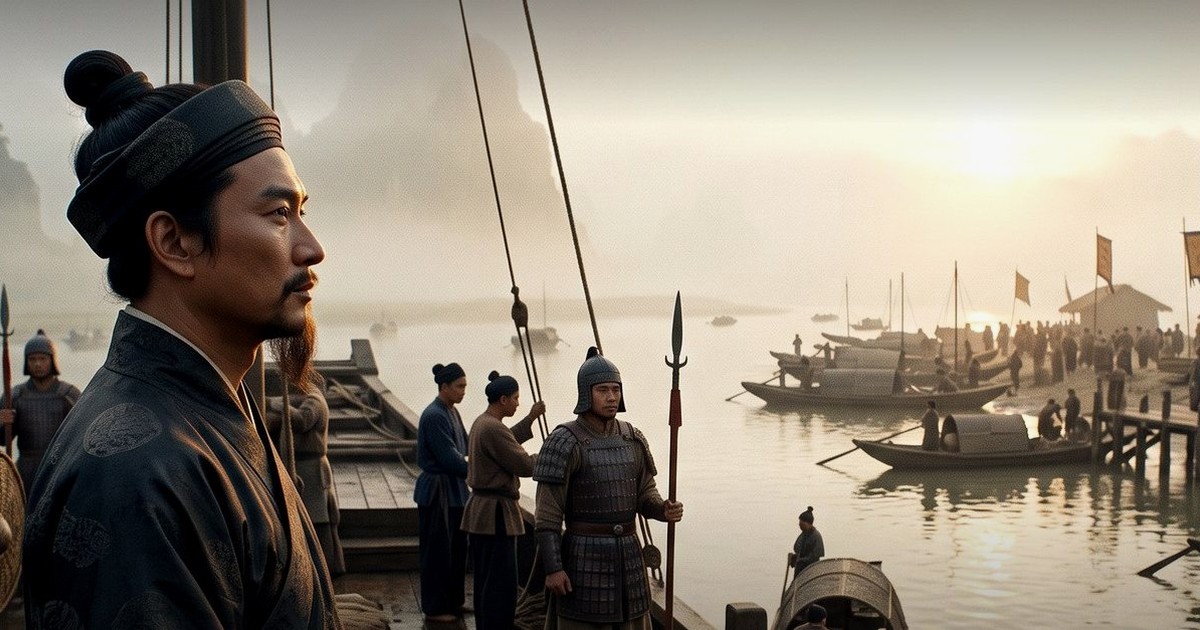
Lý Công Uẩn: the monk-raised emperor
Raised at Cổ Pháp and taught by the monk Vạn Hạnh: a palace guard who took the throne two days after a king's death — and moved the capital.
Relationships
A monk taught Lý Công Uẩn and interpreted an omen the series withholds: where the record stops, and what later readers added.
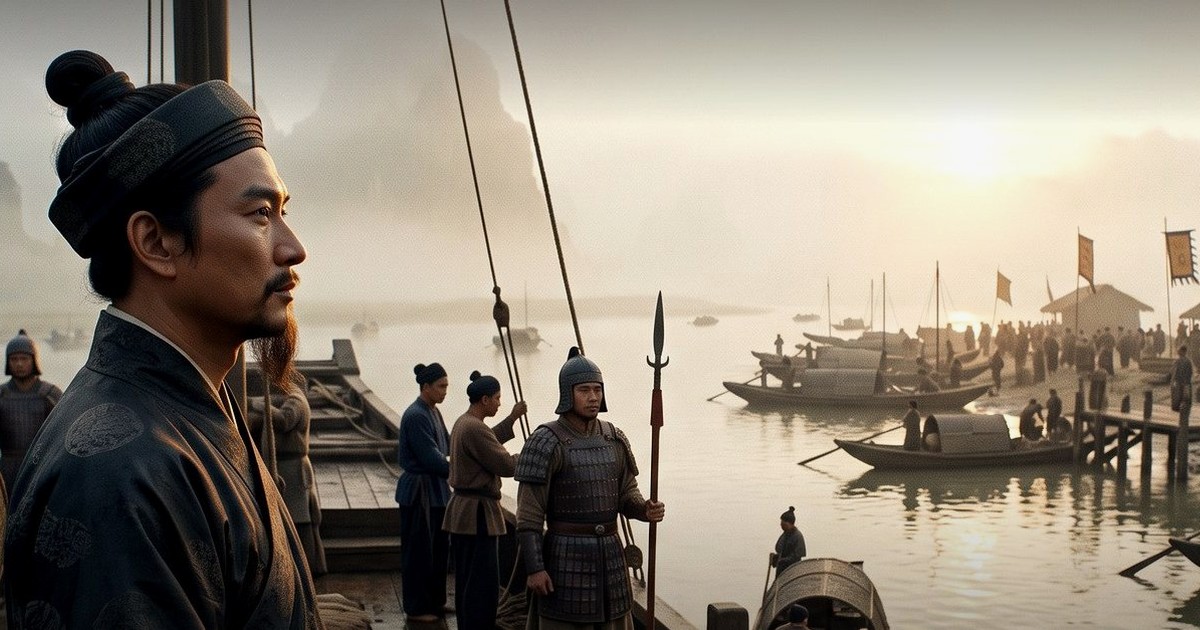
Two names, one formation. The record places Lý Công Uẩn’s upbringing at Cổ Pháp: raised by Lý Khánh Văn, sent at six or seven to study with the monk Vạn Hạnh. The series adds a second sentence to that: it introduces Vạn Hạnh among its characters as “the seer who planted the prophecy”. Between those two statements lies the relationship this article is about — and the exact point where a chronicle ends and a drama begins.
The material the site publishes gives the relationship only an outline. Lý Công Uẩn was raised at Cổ Pháp and sent to study with the monk Vạn Hạnh; later he commanded the palace guard under Lê Long Đĩnh; in 1009, two days after Long Đĩnh’s death, he took the throne; in 1010 he wrote the Edict on the Transfer of the Capital. The cast note goes further in one direction: “Lý Công Uẩn, the monk Vạn Hạnh and Dương Vân Nga bind three dynasties into a single story.”
What the record does not give is everything that would make this a scene: not a word between the two men, no account of the lessons, no age at which the boy was entrusted. The site keeps Vạn Hạnh in its list of characters “to be announced”, with the role described only as “the seer who planted the prophecy”. That is a production note, not a historical claim.
What it does preserve is the omen itself: an eight-line verse said to have been found in the markings on a kapok tree at Diên Uẩn in Cổ Pháp, which Vạn Hạnh privately interprets before telling Lý Công Uẩn that the Lý will rise and that he should take the throne.
There are two ways to read a monk and an emperor, and the series leaves both standing. The first is the quieter one: a guardian and his ward. A child placed in a pagoda, taught, and then released into a military career could be an ordinary arrangement rather than a conspiracy. The second is political: a monk’s protégé becomes a palace commander, and a prophecy about him becomes useful to the people who want a change of dynasty. Neither reading can be documented from the excerpted record.
The second reading is where later histories would press hardest. A prophecy is not evidence; it is an authorising story, and it is always easier to see in retrospect. The series’ logline names three sources of legitimate power — “the sword, the bloodline, or the pen of whoever writes the history” — and a prediction delivered before the fact is a version of the third: the pen, moving early. The record gives the omen and the interpretation; whether Vạn Hạnh composed the omen himself is a later question. Ngô Thì Sĩ, in the eighteenth century, suggested he had, and the site labels that as interpretation rather than record. The series’ disclaimer adds that where the sources are silent the drama imagines.
The cast tag places Lý Công Uẩn in Seasons II and III throughout; Vạn Hạnh appears in the “to be announced” list for Seasons II – III, with that single role description. Their shared stretch covers the regency, the war with the Song, and the accession; their scenes are the last: “The Bedchamber”, then “The Edict on the Transfer of the Capital”.
The closing quote belongs to the edict, attributed in the series to Lý Thái Tổ in 1010:
“…where the dragon coils and the tiger crouches.”
Beneath it runs the caption, “The series ends not with a battle, but with a document.” If a prophecy opened the story, a document closes it — and the man who writes the document is the one the monk raised. What happens to the teacher after the student takes the throne is not in the material the site publishes, which means the series can move him, keep him silent, or leave him offstage.
All of this section is hư cấu. It is invention, and the studio labels it so.
The pairing is unusual because the record documents its beginning and the drama supplies everything else. A child given to a teacher; a monk remembered, on the site’s own cast list, as a seer; a soldier; a throne; a document. The series’ promise — history with its arguments intact — is easiest to check here, where the record is thinnest: the argument about what the prophecy was for is left open, and the drama insists only that the question is worth asking.
Raised at Cổ Pháp and taught by the monk Vạn Hạnh: a palace guard who took the throne two days after a king's death — and moved the capital.
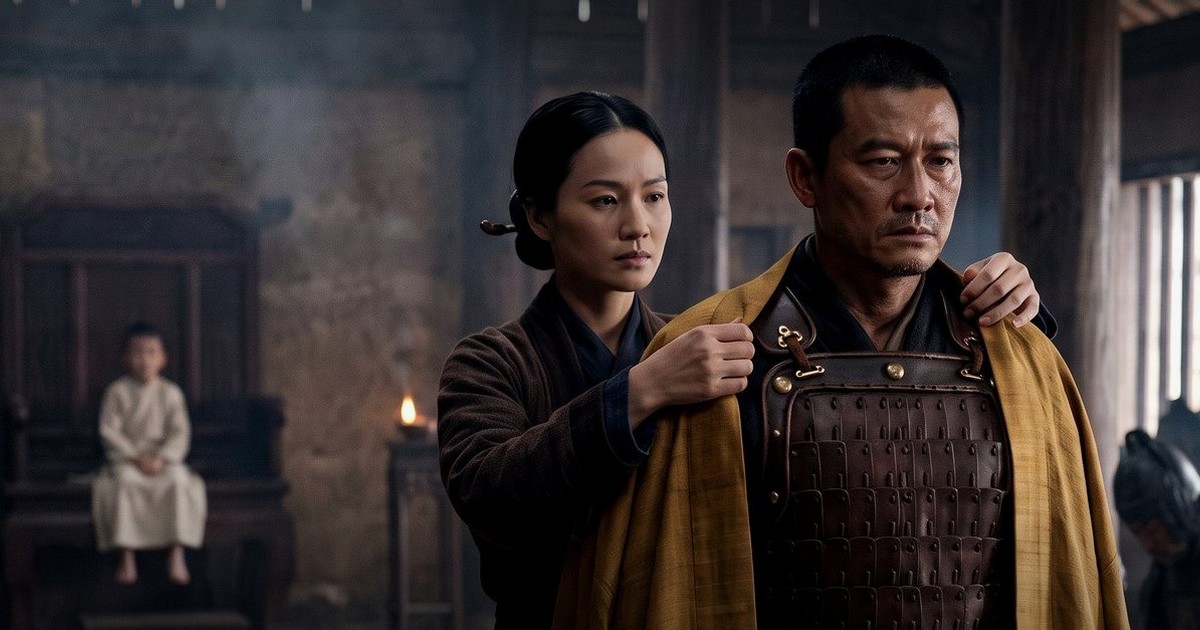
The dowager empress who ordered the imperial robe placed on a general's shoulders in 980: a lapse of virtue to some readers, vision to others.
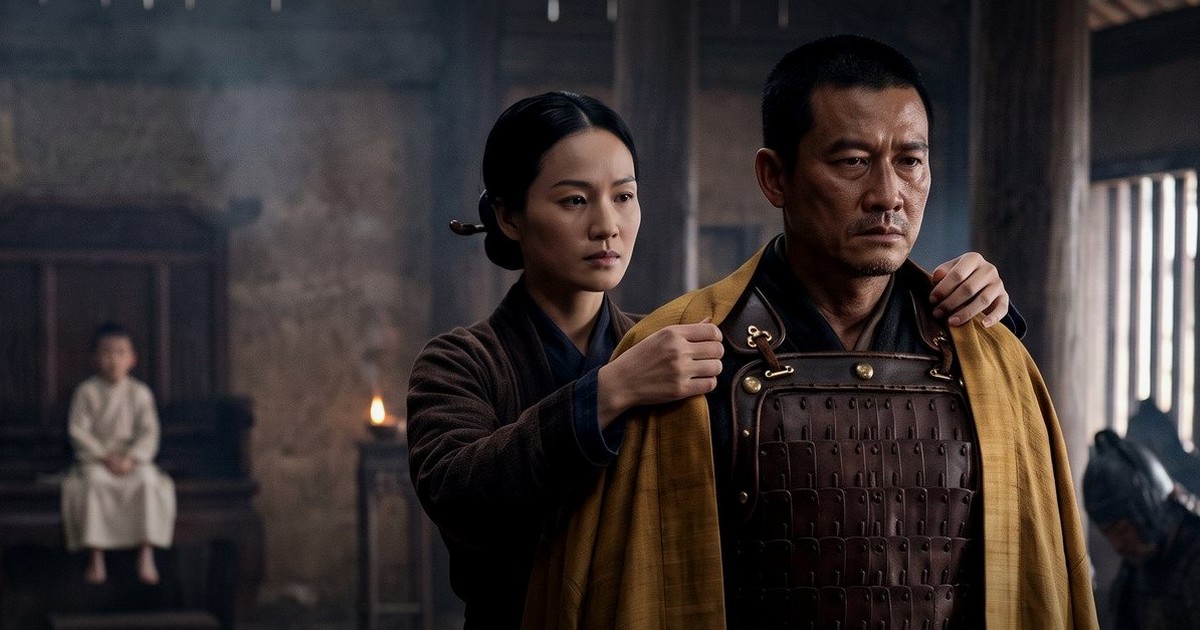
Đại Cồ Việt invents dialogue, motives, composite characters and whole scenes. What is hư cấu, what is record, and why the line is labelled.
Fiction and assumptions
The chronicle records an eight-line omen verse that Vạn Hạnh read as the Lý rise. The series never prints it — and the line not to cross is inventing one.