
968: the end of the Twelve Warlords
In 968 Đinh Bộ Lĩnh ended the Twelve Warlords and named the realm Đại Cồ Việt. The record gives a sentence; the series builds a season from the silence.
Characters
A Twelve Warlords leader who submitted to Đinh Bộ Lĩnh, married a Đinh princess, then returned with a Champa fleet and drowned in a storm.
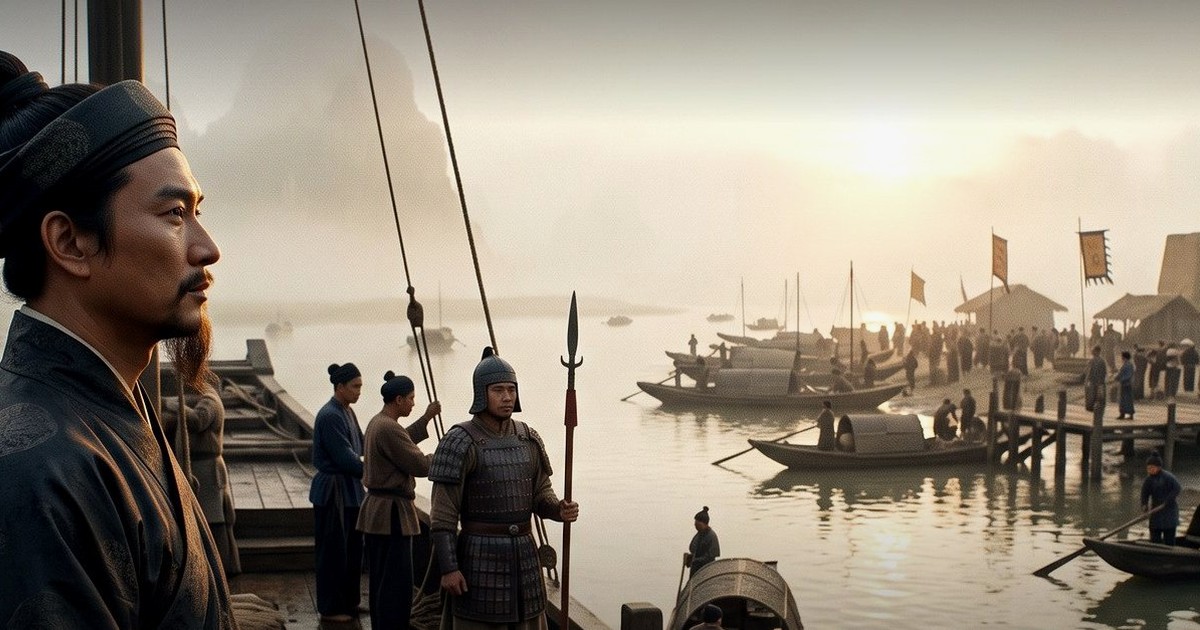
Ngô Nhật Khánh is the last Ngô remnant in the warlord field, and his story crosses the whole founding period. A leader of the Twelve Warlords based at Đường Lâm, styling himself Ngô Lãm Công and at some point An Vương, he submitted to Đinh Bộ Lĩnh, married a Đinh princess and became the new dynasty’s son-in-law. Then he fled to Champa, came back with a fleet, and drowned when a storm wrecked it at Đại Ác in 979. The record gives the sequence; later layers give him a parentage and a moral.
The chronicle gives four facts. He was a warlord leader at Đường Lâm and a relative or descendant of the Ngô house. He submitted to Đinh Bộ Lĩnh and married the Đinh princess Phất Kim, becoming a son-in-law of the dynasty. He later fled to Champa. And in 979 he returned with a Champa fleet, which a storm wrecked at Đại Ác, also called Thần Phù; he drowned. The Toàn thư also carries the title An Vương for him at some point.
That is the sequence, and it is dramatic enough without additions: a former enemy absorbed by marriage, then a fleet, then a storm in the same year the Đinh court was torn apart.
Two later readings should be kept off the record. The first is genealogical: that he was a son of Ngô Xương Văn, and that Dương thị was his mother. That is a contested genealogy, not a chronicle statement, and this page does not use it.
The second is moral: that he came back to avenge Đinh Hạng Lang, and that the storm was divine punishment. Both are later readings of the event. The record reports a fleet and a wreck; it does not report the purpose or the judgement. The identity of the Champa king who supported him is also not something this page asserts.
He married the Đinh princess Phất Kim, and the marriage is what makes him a son-in-law of the dynasty. This Phất Kim is not Lê Thị Phất Ngân, the Lê–Lý empress; they are different women, and the similar names are a trap for later readers, not evidence of one person. The page keeps them apart.
The personal name “Lê Thị Phất Ngân” is itself tradition rather than record, which is why the empress has her own page under her recorded title, Lập Giáo Hoàng hậu.
Ngô Nhật Khánh is not named in the published material, and the Champa storm is not staged. He has no cast entry and no scene. The image on this page is a boats-and-wharf still from the 981 material: it shows water, boats and soldiers, not a portrait, and the alt text says only what is visible.
It does not assert his parentage or his mother’s identity. It does not identify his wife Phất Kim with Lê Thị Phất Ngân. It does not name the Champa king. It does not read the storm as judgement, and it does not supply a motive for the return beyond the record’s fleet. It does not make him a son of Ngô Xương Văn, however often that genealogy is repeated.
Because his story shows the warlord period ending and the succession crisis arriving from outside the court at the same time. A former enemy becomes a son-in-law, then returns with a foreign fleet in 979 — the year the Đinh house falls into crisis. The record leaves the meaning open; later writers close it with revenge and providence. The page keeps the sequence and labels the additions.
In 968 Đinh Bộ Lĩnh ended the Twelve Warlords and named the realm Đại Cồ Việt. The record gives a sentence; the series builds a season from the silence.

The dowager empress who ordered the imperial robe placed on a general's shoulders in 980: a lapse of virtue to some readers, vision to others.

Eldest son of Đinh Bộ Lĩnh, killer of his half-brother, envoy to the Song court, and one of the two men murdered in 979: what the record says.