
Hoa Lư: the capital before Thăng Long
Hoa Lư is where the series begins and the realm is assembled: the caves, the feast of 979, the robe of 980 — and the capital the move of 1010 leaves behind.
Places
In 1010 the Edict on the Transfer of the Capital made Đại La into Thăng Long. The series ends on the document, not a battle.
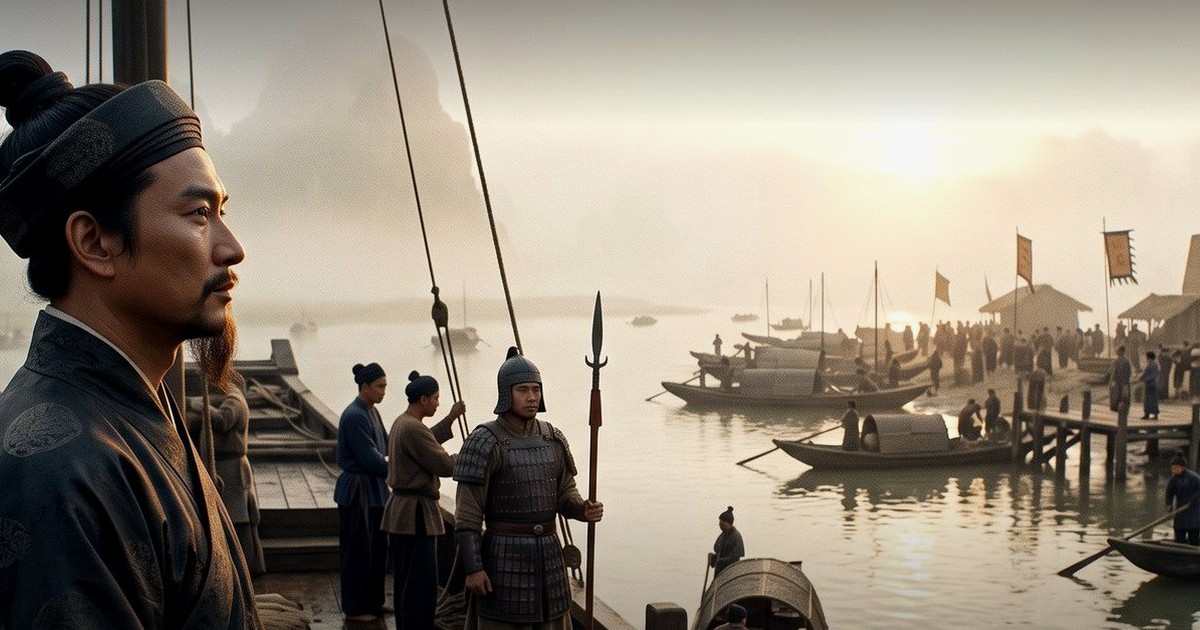
This page has two names in its title because the event it describes is a change of name. In 1010, the year after Lê Long Đĩnh's death and Lý Công Uẩn's accession, an edict moved the capital to Đại La and the place became Thăng Long. The series puts that document at the very end of its third season. Its caption: the series ends not with a battle, but with a document.
The site's chronology gives 1010 one entry: the Edict on the Transfer of the Capital; Đại La becomes Thăng Long. The site does not publish the text of the edict, only a single line from it, quoted in the series' closing frame:
“…where the dragon coils and the tiger crouches.”
The caption beneath the line attributes it to Lý Thái Tổ in 1010 — the throne name of Lý Công Uẩn — and identifies the document. The site gives no day within the year and no place where the edict was issued. The record's contribution is the year, the document, the two names and the line.
Season III runs from 1005 to 1010 and is titled “A Throne Changes Hands”. Its eighth and last episode is “The Edict on the Transfer of the Capital”. The closing frame quotes the line, names the document and adds the sentence about the battle and the document. The series' full trailer ends with the same promise in pictures: the dawn over the Đại La wharf.
The choice of ending is itself an argument about the series. Three seasons have been built out of a founding war, a regency, an invasion and a contested death; the last thing the project shows is not another fight but a piece of writing that outlives its author. The site's logline names the stakes: legitimate power comes from the sword, the bloodline, or the pen of whoever writes the history. The edict is the pen.
The material is even thinner about Đại La than about Hoa Lư. The name appears in the series' imagery as the Đại La wharf, the destination of the man standing on the deck of a ship at dawn. It appears in the chronology as the name the capital has before the edict. What the site does not give is a description of the city before the move: no walls, no streets, no palace, no population.
That gap has a consequence: the move is not presented as a journey from a known place to another known place, but as a rename, and a rename is a claim. The series can show the wharf and the dawn because the images are its own; it cannot show what Đại La was like.
The edict is the one place where the series' question about legitimacy becomes a document. If 1009 was a succession, the edict is the first act of a confident new reign — a capital moved because the realm is settled. If 1009 was a coup, the same document reads as the paper a usurper needed. The site stages both readings of the death and does not choose between them; the ambiguity carries into 1010.
The line about the dragon and the tiger is the material's only image of the new capital, and the site treats it as the record's language, not a description. It does not explain which hills or rivers it refers to, or date the move more precisely than the year. The interpretation on offer is structural: a document that names a place is also a document that claims the right to name it.
Everything in this section is hư cấu — invention — and the studio labels it so.
Because the event is the renaming. The page's slug carries both names for the same reason the series' title sequence carries both capitals: Hoa Lư → Thăng Long. Đại La is what the place was called before the pen touched it; Thăng Long is what the document made it. The series ends on the moment of the change, not on a battle, because that moment is where the project's question — who has the right to name the realm and its capital — becomes visible in a single word.
The record gives the year, the document, the line and the new name. The drama gives the dawn, the wharf and the man who wrote it. The line between them is the series' rule: the date is not invented, and the scene is.
Hoa Lư is where the series begins and the realm is assembled: the caves, the feast of 979, the robe of 980 — and the capital the move of 1010 leaves behind.

Lê Long Đĩnh died in the tenth month of 1009; two days later Lý Công Uẩn took the throne. The record explains the epithet — and four readings follow.
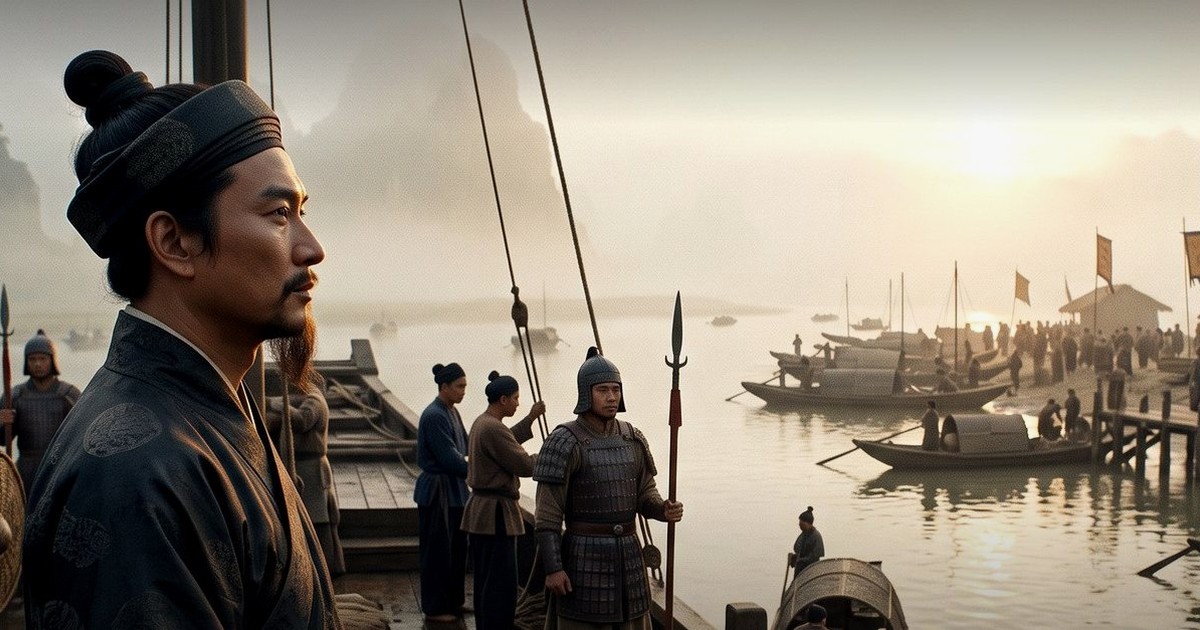
Raised at Cổ Pháp and taught by the monk Vạn Hạnh: a palace guard who took the throne two days after a king's death — and moved the capital.