Đinh Liễn: the eldest son and the night of 979
Eldest son of Đinh Bộ Lĩnh, killer of his half-brother, envoy to the Song court, and one of the two men murdered in 979: what the record says.
Characters
Son of Đinh Bộ Lĩnh, made crown prince in 978 and killed by his half-brother in spring 979: what the record says, and what the pillars only suggest.
Đinh Hạng Lang is the first death in the 979 succession crisis, and one of the least documented figures in it. He is a son of Đinh Bộ Lĩnh, made crown prince in 978, and killed by his half-brother Đinh Liễn in spring 979. His mother is not recorded, his birth year is not recorded, and the nearest contemporary object that might touch him is a set of stone pillars that never names him outright.
The chronicle gives two facts: he was made crown prince in 978, and he was killed by Đinh Liễn in the spring of 979. It does not give his age, his mother, or a scene. The killing is the second in the sequence that ends the year: Đinh Liễn removes Hạng Lang first, and then Liễn and his father are murdered in the tenth lunar month.
The mother attributed to him in modern retellings — Hoàng Thị — is a modern guess, not a chronicle name. The record is silent, and the page is silent with it.
A set of stone-sutra pillars was begun in 973, inscribed in Đinh Liễn’s voice, vowing a hundred pillars for a dead brother named “Đại đức Đính Noa Tăng Noa”; nearly twenty have been found. Identifying that name with Hạng Lang is a scholarly inference, not an equation the inscription makes. The pillars are the closest thing to contemporary material evidence in this story, and they are evidence for a vow by Liễn, not proof of who the dead brother was.
Later traditions supply his age, his mother and the pillar identification; a 2011 television film is not a source, and this page does not use it. The record itself gives the title, the year and the killer, and nothing about the boy.
He is never named. The 979 chronicle line names only the father and Đinh Liễn, and the series’ Season II summary speaks of “the father and his eldest son” — not Hạng Lang. There is no cast entry, no scene and no portrait.
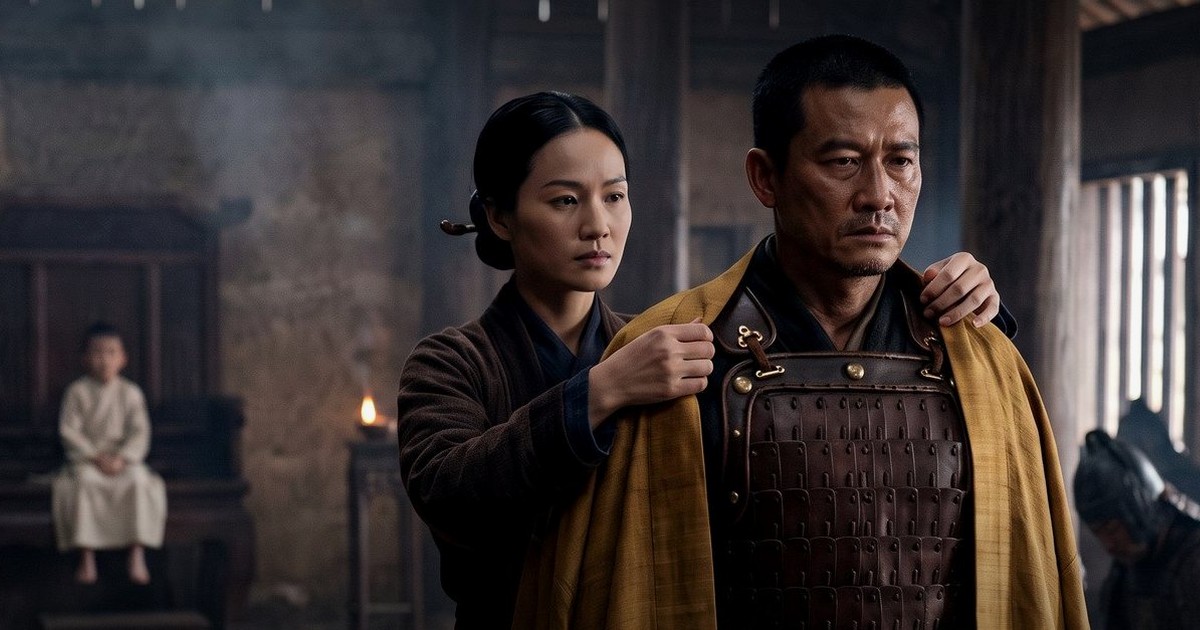
Everything here is hư cấu. Any scene of Hạng Lang at court, or of the killing, is invention; the published material gives none. The still on this page is a Đinh court image: the child shown seated on the throne is Đinh Toàn, not Hạng Lang, and the alt text describes the image without naming the child.
It does not give a birth year or an age, and it does not call him a child — the record does not say how old he was. It does not name his mother. It does not claim the inscription explicitly names Hạng Lang. And it does not make his death the only cause of 979: the murders of the king and Đinh Liễn in the same year are part of the same crisis.
Because his elevation and killing are the first moves in the succession crisis that hands the realm to a six-year-old and the regency to Lê Hoàn. He is the heir who was removed before the deeper removal could happen, and the record gives him only a title, a year and a brother’s name. The page is short because the record is short, and it keeps the difference between what is recorded and what is inferred.
Eldest son of Đinh Bộ Lĩnh, killer of his half-brother, envoy to the Song court, and one of the two men murdered in 979: what the record says.
He ended the Twelve Warlords and gave the realm its name. Then a night of feasting in 979 ended the reign — and the chronicle names a killer.
The chronicle records Lê Long Đĩnh’s death in the bedchamber and explains the Ngọa Triều epithet. Folk history, Ngô Thì Sĩ and the field add readings.