Lê Hoàn: the general who became emperor
The general who took the robe in 980 and shattered the Song army in 981: Lê Hoàn, the series’ Lê Đại Hành, between the chronicle and the screen.
Characters
The general under the Đinh and Lê who rallied the troops to acclaim Lê Hoàn at Đào Lâm in 980 — and why “betrayal” is a later verdict, not the record.
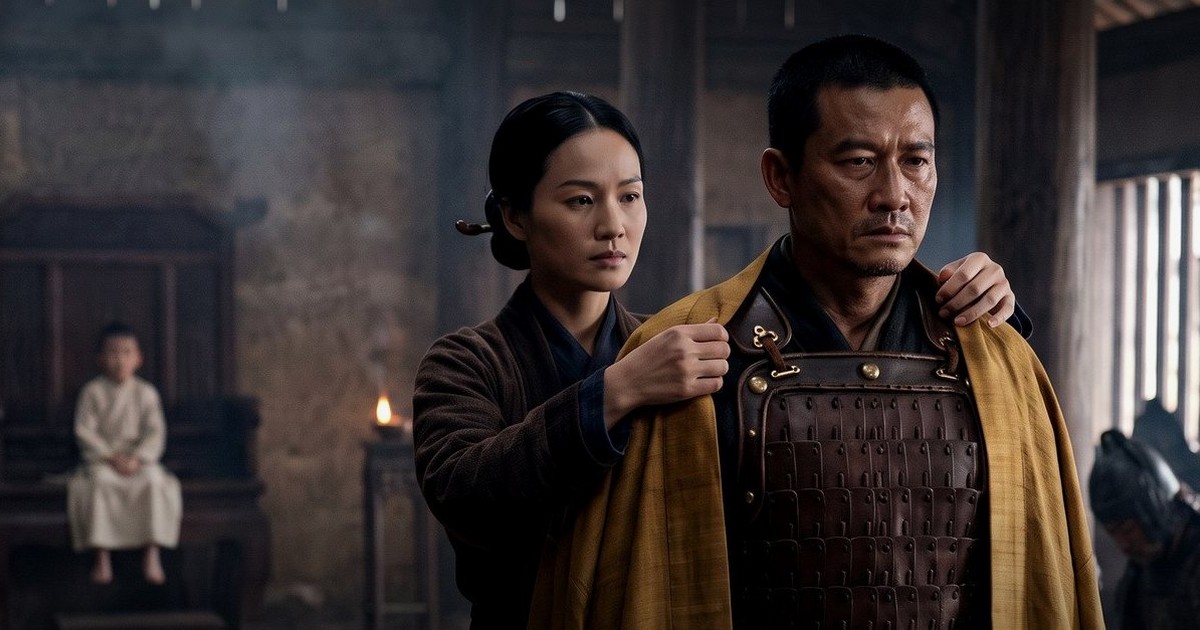
Phạm Cự Lạng is the human face of the generals in the series' central image. In the robe scene, the men who kneel on both sides are anonymous; in 980, at Đào Lâm, one of them is recorded as the officer who rallied the troops to acclaim Lê Hoàn. That is his entry into the story, and the page is about how little the record adds to it.
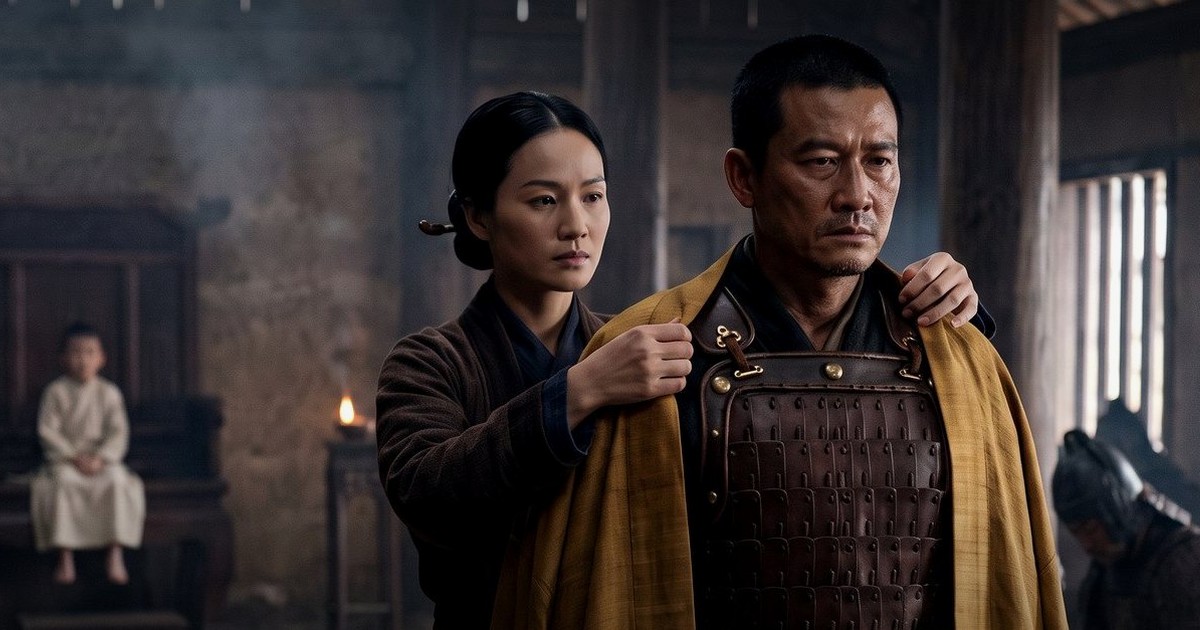
The sequence is the one the series stages. In 979 the king and his eldest son are murdered; a six-year-old succeeds; Lê Hoàn becomes regent. In 980, at Đào Lâm, the generals acclaim Lê Hoàn, and the dowager empress orders the imperial robe placed on him. The chronicle tradition gives Phạm Cự Lạng the rallying role at Đào Lâm, with a fragment of his appeal: “Có công thì thưởng…” — let service be rewarded. He became Thái úy.
What the record does not give is equally important. It does not say that he draped the robe: the empress orders it. It does not say he acted alone: the acclamation is the generals'. And it does not give him a speech beyond the fragment, a scene, or a reason.
Later accounts sketch the rest of his life in dates and offices: a command title under the Đinh in 968; the 981 war; the Champa campaign of 982; canal works in 983; death from malaria at Đồng Cổ in 984, aged forty-one. His origins are recorded inconsistently — one description gives Trà Hương in Hải Phòng, while the source page is categorised under Hải Dương — and the conflict is unresolved. Later accounts also say his brother Phạm Hạp was executed by Lê Hoàn, a detail the fuller account leaves uncertain.
That is a career outline, not a biography. The page keeps it at outline length because that is what the record supports.
The word usually attached to him now is “betrayal”. It does not come from the tenth century. Ngô Thì Sĩ, writing in the Việt sử tiêu án in the eighteenth century, condemns him for siding with Lê Hoàn against the Đinh: “Bặc – Điền vì nước liều mình / Cớ sao Cự Lượng tán thành mưu gian” — roughly, if Bặc and Điền risked their lives for the realm, why did Cự Lạng endorse a treacherous design?
That is a moral verdict written nearly eight centuries later, and the page labels it as such. The record's judgement is not betrayal; the record barely has a judgement. It has an acclamation, an order from the empress, and a reign that followed.
It does not settle his birthplace, the exact standing of his brother's death, or how many of the generals he spoke for. It does not make him the sole kingmaker, and it does not put the robe in his hands. The series stages the acclamation with anonymous generals and gives him no cast entry; the robe image is the closest still, and the alt text describes what is visible rather than naming him in it.
Because the kingmaker appears in the record as a clause and in later writing as a traitor. The gap between those two is the same gap the series keeps open everywhere: what the record states, what later readers made of it, and what the drama chooses to stage. Phạm Cự Lạng is a good test case — a man whose action is recorded, whose motive is not, and whose reputation was written afterwards.
The general who took the robe in 980 and shattered the Song army in 981: Lê Hoàn, the series’ Lê Đại Hành, between the chronicle and the screen.
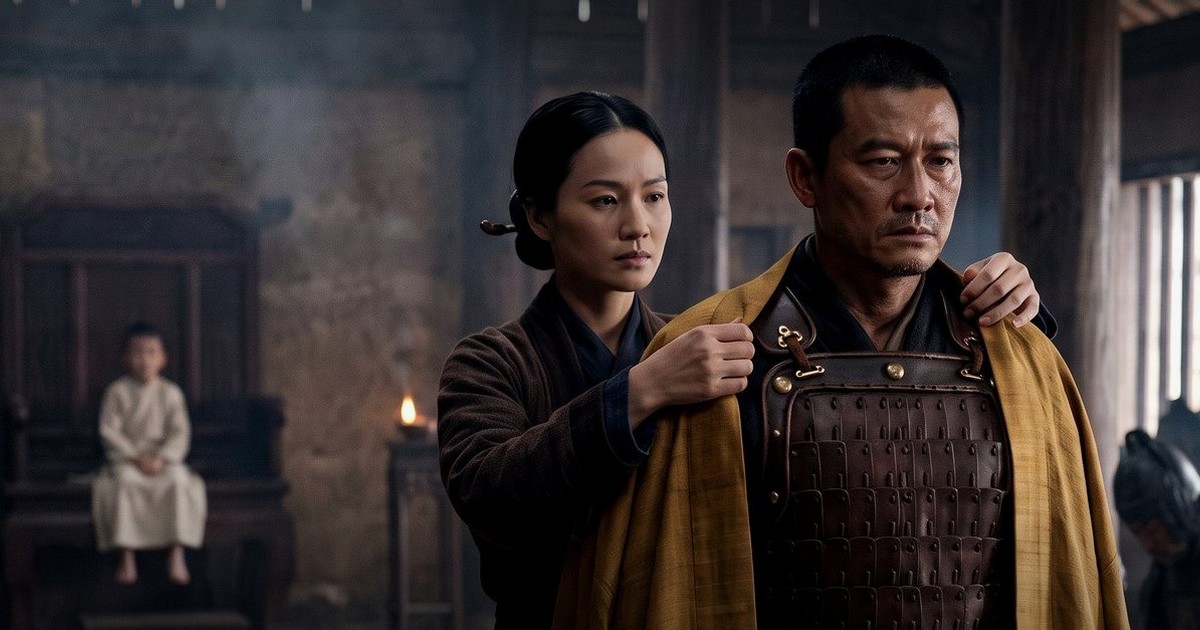
The dowager empress who ordered the imperial robe placed on a general's shoulders in 980: a lapse of virtue to some readers, vision to others.
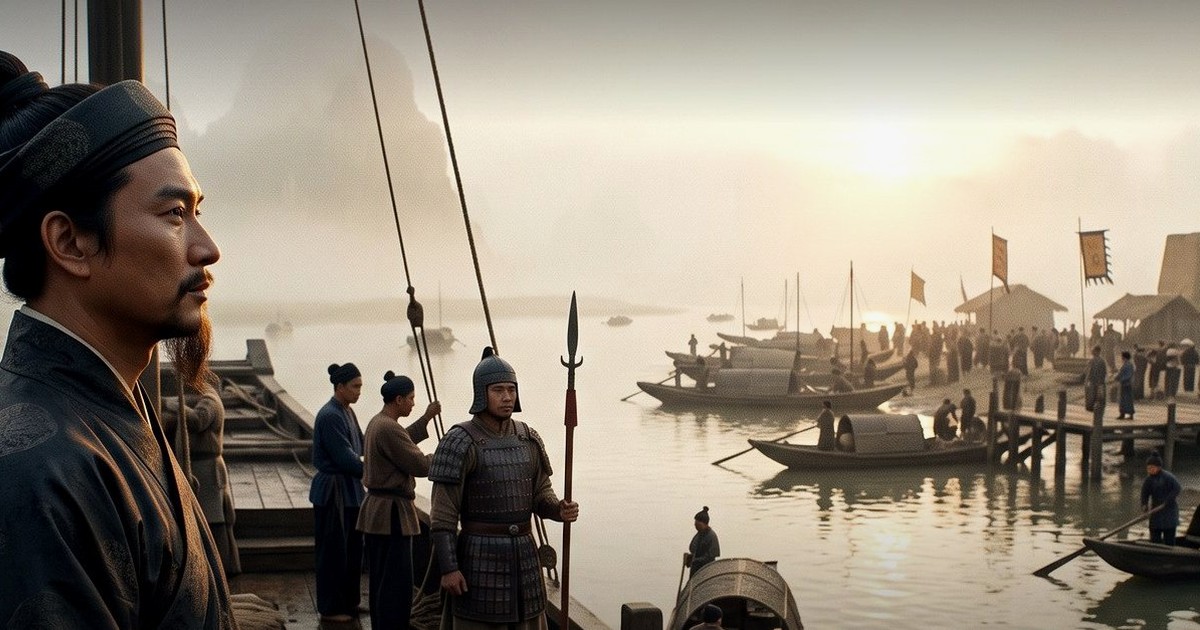
In 981 Hầu Nhân Bảo fell and the Song army fled. The record gives the war two lines; Season II gives it a border, a boy on a throne and a general.