Đinh Bộ Lĩnh: the man who ended the Twelve Warlords
He ended the Twelve Warlords and gave the realm its name. Then a night of feasting in 979 ended the reign — and the chronicle names a killer.
Characters
A Đinh founding general and Định Quốc Công in 968 who caught the king’s killer and died resisting Lê Hoàn: the record and the later labels.
Nguyễn Bặc is the old guard of the Đinh court, and his story is one of the record’s cleaner arcs. A founding general, a childhood associate of Đinh Bộ Lĩnh, made Định Quốc Công in 968 and the leading minister of the new court, he caught and executed the king’s killer in 979 — and then died in the same year resisting the man who took the throne. The page follows that arc and then separates it from the labels later centuries attached to him.
The outline is firm. Nguyễn Bặc lived from 924 to 979, was one of the generals who helped Đinh Bộ Lĩnh found the realm, and received the title Định Quốc Công in 968. He was the leading minister of the new court and a childhood associate of the king. After the murders of 979, he caught and executed Đỗ Thích, the man the chronicle names as the killer.
Then came the resistance. With Đinh Điền and Phạm Hạp, he opposed Lê Hoàn after the transfer of power. He was captured and executed in 979, aged fifty-five. The chronicle records the rising and the execution, and Ngô Sĩ Liên, writing later, defends the rising as loyalty rather than rebellion.
Two later claims should be kept off the record. Genealogies make Nguyễn Bặc an ancestor of the Nguyễn lords and dynasty — a claim about descent, not a chronicle statement. And “first prime minister” is a later label for his office, not a title the tenth-century record uses.
There is also a later list, the “Giao Châu thất hùng”, that groups him with other figures; it is a later framing, not a contemporary roll. The page mentions these labels because they are attached to him, and keeps them in the register where they belong.
The interesting question is what his resistance means. Read one way, he is the loyalist who defended a child emperor’s court against a general who had taken the robe. Read another, he is the loser of a political struggle, and “loyalty” is the word the winning record’s later readers chose for him. Ngô Sĩ Liên’s defence of him is itself a later judgement, and the site labels it as commentary.
What the record does supply is cause and effect. His defeat and death in 979 clear the way for Lê Hoàn’s position in 980; the old court’s resistance ends, and the new reign proceeds. The drama’s robe scene has room for the men who resisted — but the record gives none of their words, and the series has not staged their side.
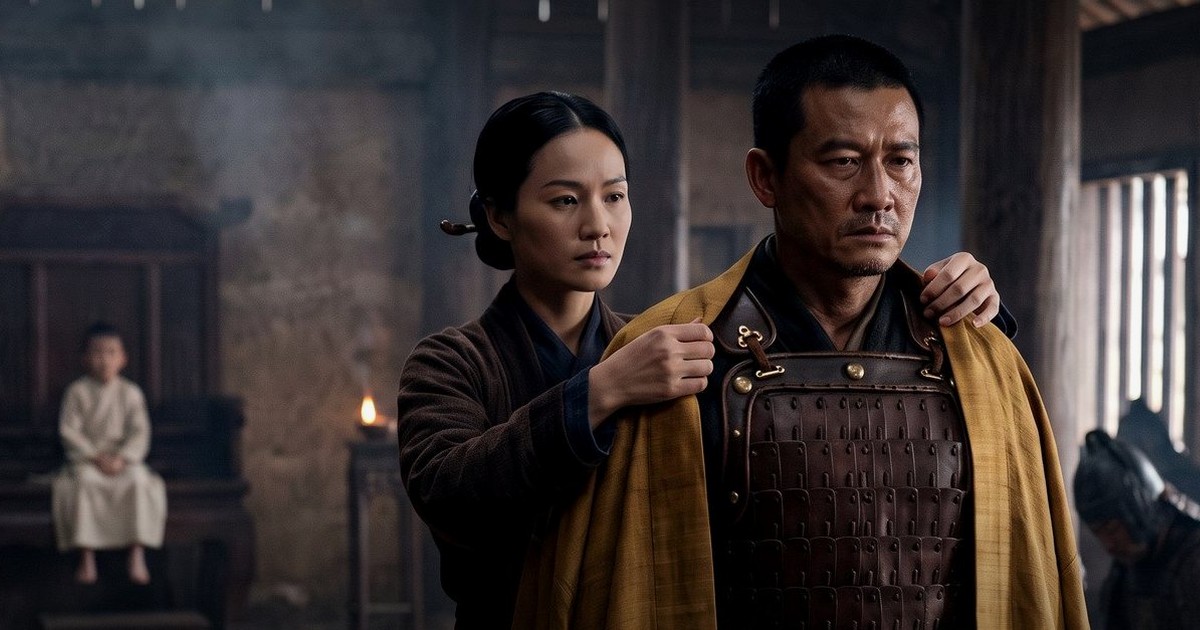
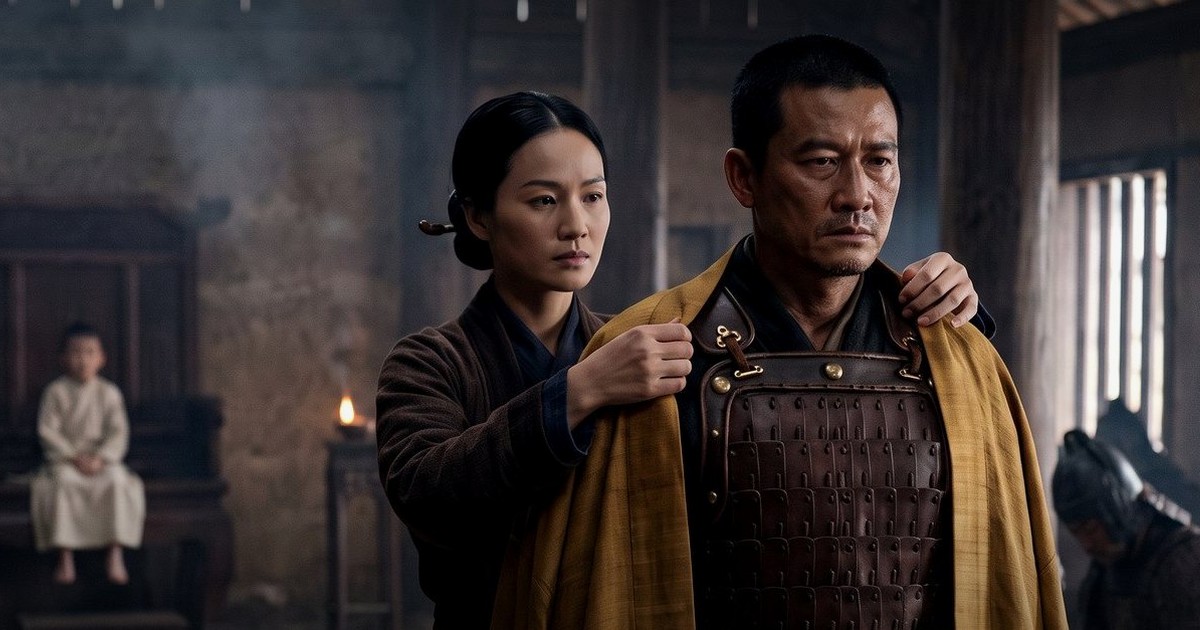
Nguyễn Bặc is not named in the published material. The 979 feast and the 980 robe are staged; the old guard’s rising is the missing middle. He has no cast entry, no scene and no portrait, and this page does not invent one. The image here is an armoured general still: it shows a figure in armour and a gold cloak, not a portrait of Nguyễn Bặc.
It does not assert the Nguyễn-dynasty ancestry claim, and it does not present “first prime minister” as a contemporary title. It does not make him flawless: the record shows a loyalist, not a saint. It does not give a precise death date beyond 979, and it does not claim the chronicle records every move of the rising.
Because his arc is the record’s version of the 979 crisis from the losing side. The series asks who killed the king and who profits; Nguyễn Bặc is one of the men who paid for the answer. The page keeps his record and refuses his genealogies, which is the same method the series uses on a larger scale: state what is written, label what was added later, and let the viewer see both.
He ended the Twelve Warlords and gave the realm its name. Then a night of feasting in 979 ended the reign — and the chronicle names a killer.
Both early chronicles name Đỗ Thích as the killer of Đinh Tiên Hoàng and Đinh Liễn. Modern historians question it; the record keeps the name.
The general who took the robe in 980 and shattered the Song army in 981: Lê Hoàn, the series’ Lê Đại Hành, between the chronicle and the screen.