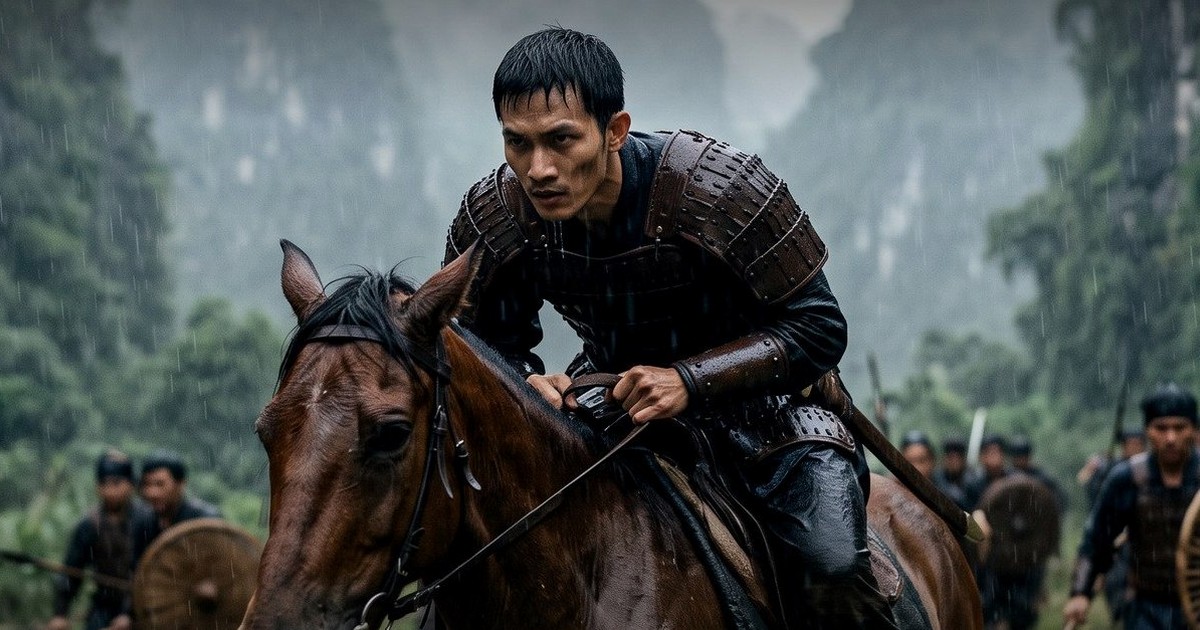
Lê Long Đĩnh: the last Lê king and the Ngọa Triều epithet
The last Lê king, an epithet that may be slander, and a death the record leaves unexplained — the series stages four readings of it.
Relationships
A palace guard, a king who died in his bedchamber, and two days: Lê Long Đĩnh and Lý Công Uẩn, and what the record never explains.
Contains spoilers for the series.
This is the shortest important relationship in the series, and it is mostly a gap. The record says Lý Công Uẩn commanded the palace guard under Lê Long Đĩnh. It says that Long Đĩnh died in his bedchamber in 1009, at twenty-four by the chronicle’s count. It says that two days later Lý Công Uẩn took the throne. Between a guard’s job and a guard’s succession there are two days, and the record spends them on nothing.
The facts the material gives are these. Lý Công Uẩn was raised at Cổ Pháp and taught by the monk Vạn Hạnh, and later commanded the palace guard under Lê Long Đĩnh. In 1005, Lê Long Đĩnh took the throne after his father’s death and eight months of struggle, killing his brother, who had reigned three days. In the tenth month of the year Kỷ Dậu (1009), Long Đĩnh died in the bedchamber; the main text adds that he was called Ngọa Triều because he had hemorrhoids and held court lying down, and a note marked as wild history adds wine and women. No further cause of death is given. Two days later, Lý Công Uẩn took the throne, and in 1010 issued the Edict on the Transfer of the Capital: Đại La became Thăng Long.
That is the whole skeleton of the relationship: one office, one death, one interval, one accession. The record gives no conversation, no order, no ceremony, no testimony from anyone in the palace. The two days are recorded only as a number.
The first interpretation is structural. A palace guard commander is the person closest to a king’s death and the person best placed to act after it. The record states both facts without connecting them, and the series’ question — “A tyrant — or a victim of the victor’s pen?” — points at the space between them. Whichever way one reads Long Đĩnh’s reign, the surviving account was written later and is often partisan, as the studio’s disclaimer says. That is not evidence of a crime; it is a reason to read carefully.
The second interpretation is the poisoning hypothesis, and the site labels it precisely. Ngô Thì Sĩ, in the Đại Việt sử ký tiền biên printed in 1800, calls the epithet “Ngọa Triều” vulgar and baseless, and records an older question: perhaps the Lý family, when the king was ill, had him poisoned and concealed it, so the histories did not record it. It is an inference written nearly eight centuries later, with no contemporary evidence, belonging to the Tiền biên rather than the Toàn thư. It names a family, not Lý Công Uẩn personally, and it is one of four readings the series stages without confirming.
The third reading is the quietest: a king who died of illness at twenty-four, and a senior officer accepted as his successor because he was the one standing there. That reading requires no conspiracy and no defence. It is not in the excerpted record either. The series holds all three.
Lý Công Uẩn’s cast tag runs Seasons II and III throughout; Lê Long Đĩnh is Season III. Their shared moment is the hinge of the last season, and the series gives it a sequence of episodes: “Seven Months Without a King”, “Three Days”, “The Rider”, “The Bedchamber”, and then “The Edict on the Transfer of the Capital”. “The Bedchamber”, the seventh episode, stages the four readings of the death side by side; the site’s footnote says none is confirmed. The series’ closing frame is the document, not the death: “The series ends not with a battle, but with a document.”
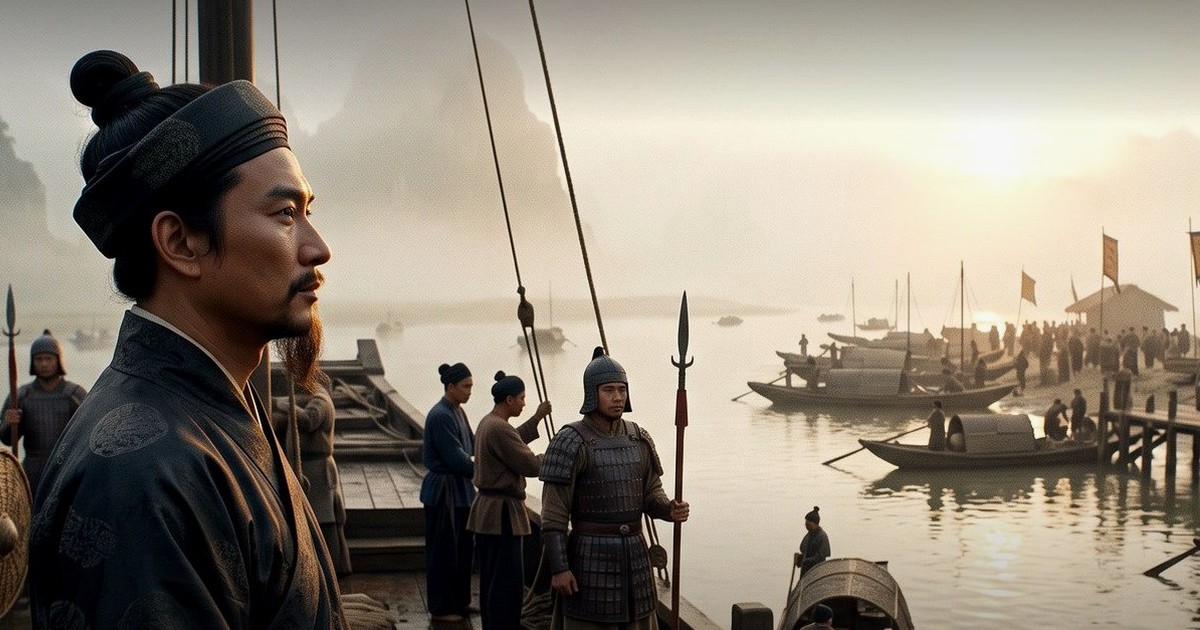
The still on this page is Uẩn’s, not Long Đĩnh’s: a bearded man in a dark robe on a boat at dawn, looking toward a distant wharf. Long Đĩnh is not in the frame, and the page does not imply he is.
Everything here is hư cấu, and the disclaimer’s list is the inventory: dialogue, private thoughts, relationships, motives, composite or minor characters, places, timelines and the order of events.
The relationship is a good example of what the series thinks a historical drama is for. The record gives it an office, a death, a two-day gap and a new reign; the series fills the gap with scenes, labels them as invention, and then refuses to let any one reading win. The guard outlived his king by two days, and the story of those two days is the one the pen was left to write.
The last Lê king, an epithet that may be slander, and a death the record leaves unexplained — the series stages four readings of it.
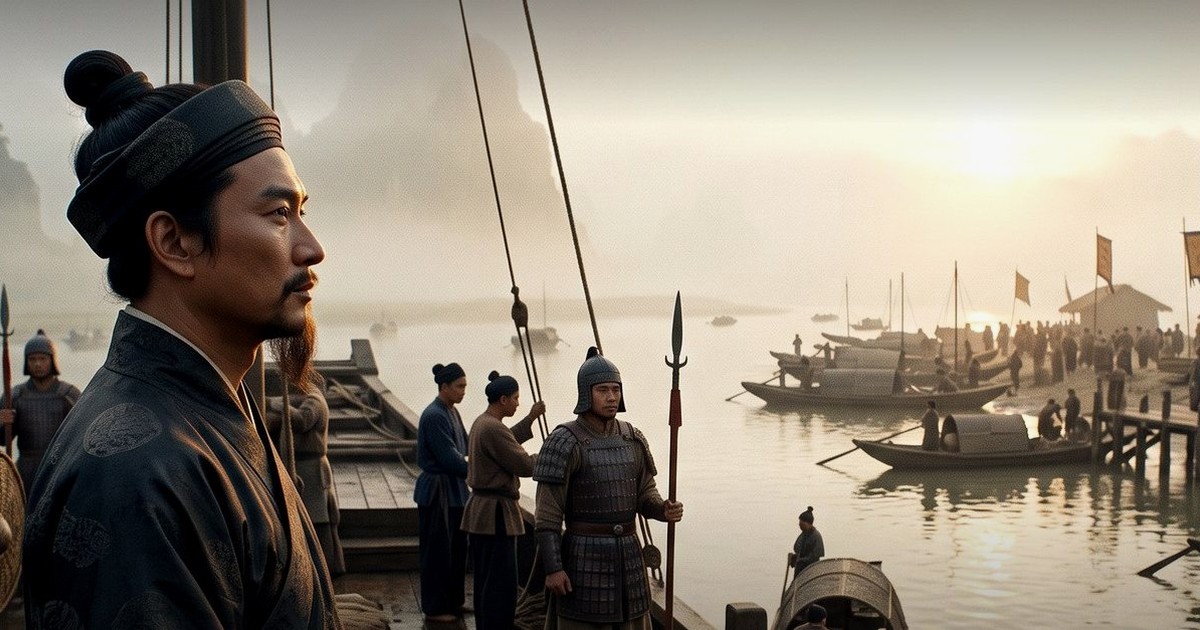
Raised at Cổ Pháp and taught by the monk Vạn Hạnh: a palace guard who took the throne two days after a king's death — and moved the capital.
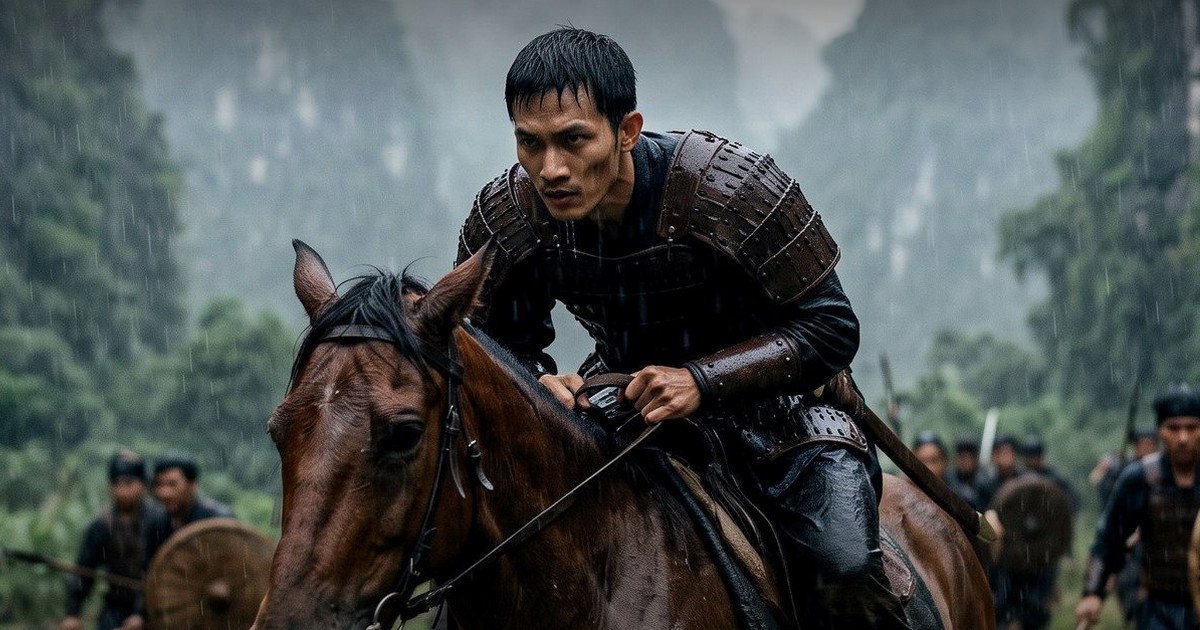
The chronicle records Lê Long Đĩnh’s death in the bedchamber and explains the Ngọa Triều epithet. Folk history, Ngô Thì Sĩ and the field add readings.